REVIEW · AGRA
Agra 101 City Walk
Book on Viator →Operated by Agra Heritage Walks · Bookable on Viator
One walk can show Agra’s other face. This private city walk trades cars for up-close streetside history—with a guide who helps with photos, plus local snacks along the way.
You’ll hit mosques, spice markets, and old neighborhoods tied to Mughal-era culture, with stops planned around how people actually lived (and still do). One thing to consider: expect real walking and a few stair-and-rooftop moments, so comfortable shoes matter.
For me, the best part is the pace. You move at your speed in a small group, and the guide keeps your route coherent—so the stories don’t feel random. I also like that this tour starts and ends at Jama Masjid, making it easy to build into a day without complicated transfers.
Agra is often reduced to one monument. This walk helps you see why the city mattered long before and after the Taj Mahal, from trader streets and 18th-century building facades to a rooftop panorama from a local home.
In This Review
- Key things that make Agra 101 City Walk worth your time
- Walking Agra up close beats the Taj-only routine
- The 3-hour plan: what to expect and how to prepare
- Starting at Jama Masjid: the mosque as Agra’s introduction
- Rawatpara spice market: 15th-century trade with a scent trail
- Fuvara and the walled-city edge: homes, temples, and a marble shop
- Police Station Gudri Mansoor Khan: turning past markets into present landmarks
- Rooftop views on Rawat Para Road: where the city opens up
- Back to Rawatpara and Kala Mahal: Mirza Ghalib’s birthplace area
- How the guide makes (or breaks) this kind of walk
- Price and value: is $41.12 a fair deal for 3 hours?
- Who this walking tour fits best
- Should you book Agra 101 City Walk?
- FAQ
- How long is Agra 101 City Walk?
- Where does the tour start and end?
- How much does it cost?
- Is this a private tour?
- What’s included during the walk?
- Are admissions required for the stops?
- What are the tour opening hours?
- Will I get confirmation after booking?
- Can I use a mobile ticket?
- What’s the cancellation policy?
Key things that make Agra 101 City Walk worth your time
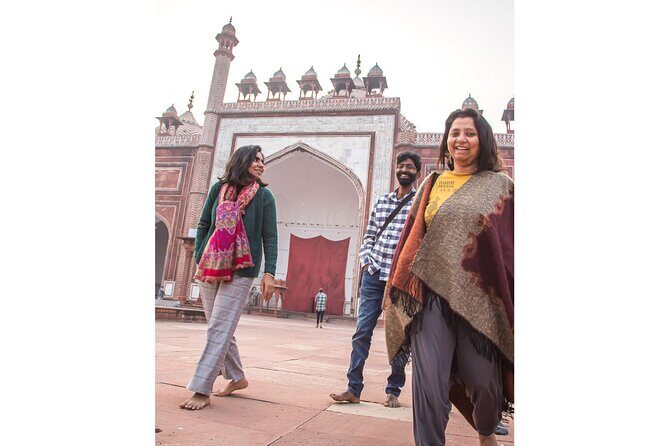
- A private walking route that keeps you in the city’s neighborhoods instead of behind a windshield
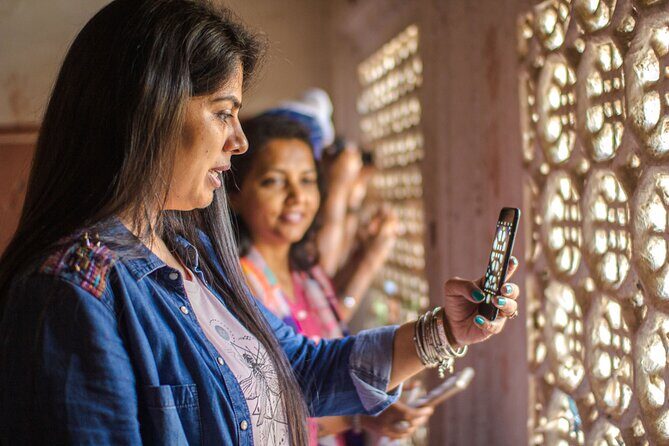
- Photo help from your guide, not just a quick “smile here” moment
- Spice-market stop + mosque time to balance everyday Agra with big-city faith and culture
- Rooftop viewpoint from a local home, for a better sense of the city’s layout
- Mirza Ghalib’s birthplace area (Kala Mahal) and 18th-century bungalows facades
- Local snacks included, so the walk feels like part of local routine, not a museum sprint
Walking Agra up close beats the Taj-only routine
If your Agra plan is mostly centered on the Taj Mahal, you’ll miss the city’s everyday texture. This is the fix. By staying on foot, you get the small stuff you normally glide past: the way lanes funnel toward landmarks, the rhythm of markets, and the “why is this here?” feeling when you see centuries-old structures still used.
The tour’s structure helps too. It’s not just wandering. You start at Jama Masjid, then move through spice and temple areas, old residential quarters, and places tied to notable figures. Even when you’re only there for 20–40 minutes at a stop, the guide ties it together so you leave with a clearer mental map.
And yes, you’ll hear stories that connect the Mughal-era capital of wealth to the Agra you’re standing in today. That’s the real value: the walk turns monuments into context.
Other walking tours we've reviewed in Agra
The 3-hour plan: what to expect and how to prepare
This is approximately a 3-hour private walk, using a mobile ticket. The stops are paced so you’re not stuck in one place too long, and the itinerary includes multiple short segments (roughly 10–40 minutes each).
The walking parts are the main “logistics.” There are rooftop climbs built into the route, and the city streets can be uneven. Bring comfortable shoes and expect some steps. If you’re sensitive to crowds, remember you’re not following the same bus-and-line schedule as big-ticket sites.
Because it’s private, you can actually use that time. If you want to slow down at a market stall or linger for photos outside a doorway, you can. If you want to move faster when the group reaches the next stop, you can do that too.
Also, this is designed for “most travelers,” and service animals are allowed. It’s near public transportation, so you’re not locked into a complicated pickup.
Starting at Jama Masjid: the mosque as Agra’s introduction
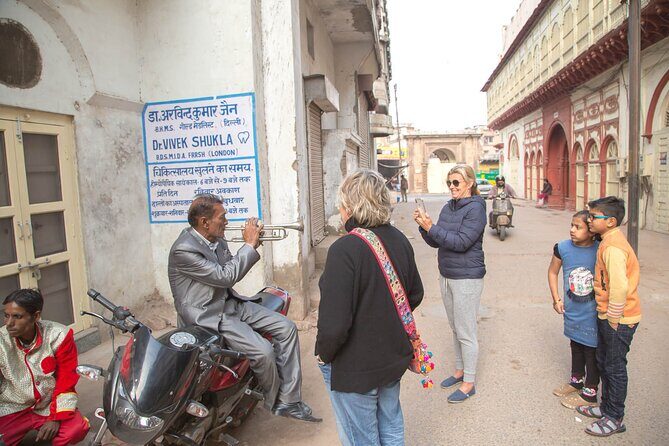
You meet at Jama Masjid, Agra, and the walk begins with a short orientation by your leader. The first stop is about setting expectations and giving you a framework—how the walk will run, and how the city stories will connect from one neighborhood to the next.
Then you go inside the mosque and start the history thread. Even if you’ve seen big mosques before, this start matters because Jama Masjid isn’t only a landmark. It acts like a “compass” for the rest of the walk: trade areas, residential quarters, and old cultural sites make more sense after you understand the role of major religious institutions in a city’s daily life.
Time check: about 20 minutes here, with admission listed as free.
Rawatpara spice market: 15th-century trade with a scent trail
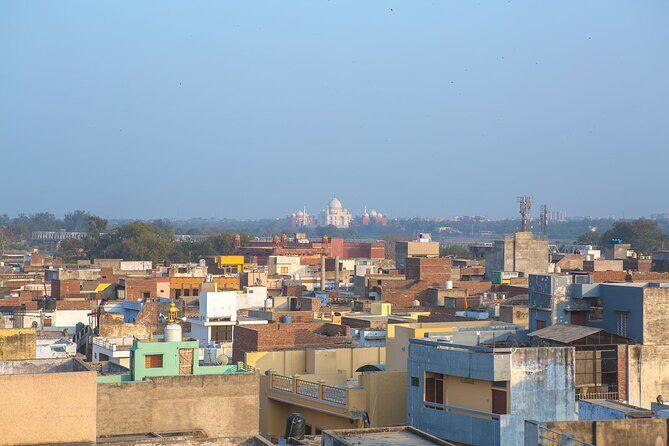
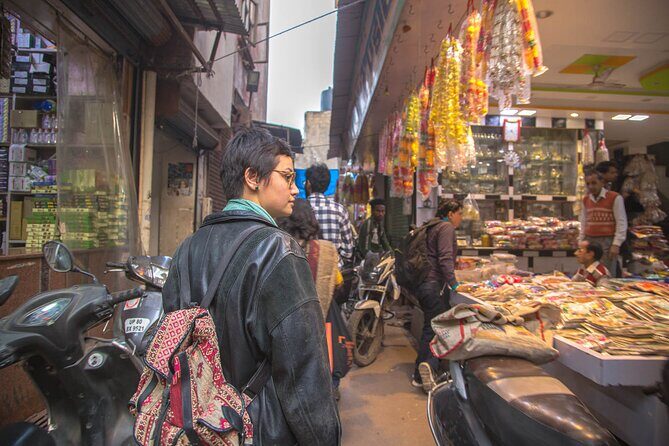
Next comes Rawatpara, described as a historically important spice market dating back to the 15th century. Markets like this are where history stops being abstract. Spices aren’t just goods; they’re connections—between routes, wealth, and the kind of street life that builds neighborhoods.
This stop also includes more than shopping streets. You’ll visit medieval temples, and you’ll get a chance to climb a rooftop. That rooftop element is key: it shifts the view from “street-level stories” to “how the city sits on top of itself.”
The guide talks spices and stories at this point, which I love because it gives you a practical way to remember what you’re seeing. When you smell spices or hear the names of them in context, you remember the route later.
Time check: about 30 minutes, admission free.
Fuvara and the walled-city edge: homes, temples, and a marble shop
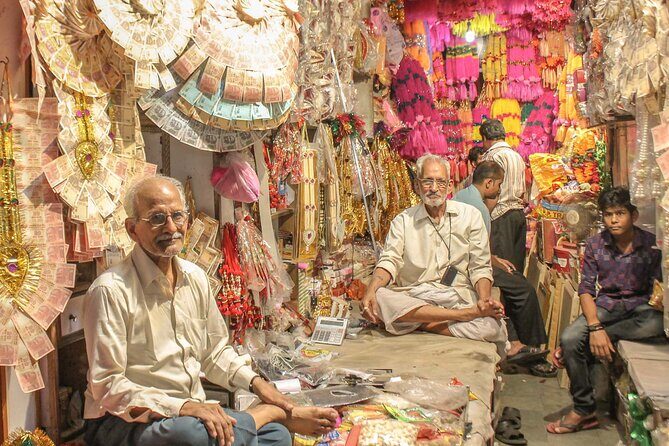
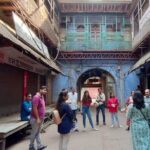
Then you move toward Fuvara, passing along the historic walled city where you can still spot 18th-century buildings. This is one of those sections where walking actually helps. From the street, you see the edges of older neighborhoods—the way walls shape movement and how older architecture survives by staying in use.
At this stop, you’ll enter certain homes and temples to look from the inside (with the guide managing the flow). It’s also where the route includes an old marble shop—the kind of place that’s easy to miss if you’re only chasing big monuments.
This segment is a good reminder that Agra isn’t frozen in time. Some parts feel ceremonial and architectural. Other parts feel functional and everyday. That mix is the point.
Time check: about 40 minutes, admission free.
Other walking tours we've reviewed in Agra




Police Station Gudri Mansoor Khan: turning past markets into present landmarks
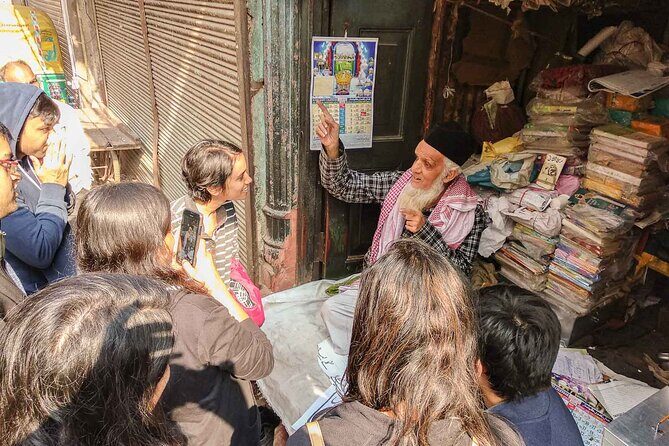
One of the most interesting parts of this walk is the stop at Police Station Gudri Mansoor Khan. The route frames it as part of the erstwhile courtesan market that existed within the fort city.
This kind of stop is powerful in a quieter way. You’re not just learning dates—you’re seeing how places change roles over time. A former social center can become an official landmark. It doesn’t mean the past disappears; it means layers stack on top of each other.
Your walk leader gives history at each stop, and this one benefits from that pacing. It’s the sort of story that can feel abstract if it’s told in isolation, but it lands better when you’ve already walked through trade and residential quarters right before.
Time check: about 20 minutes, admission free.
Rooftop views on Rawat Para Road: where the city opens up
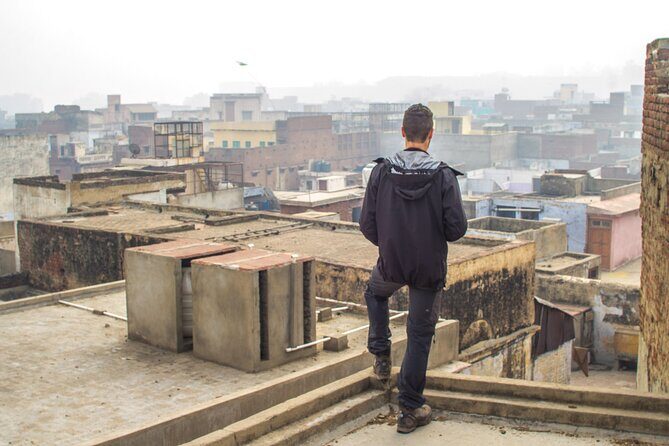
Then comes Rawat Para Road, and this is one of the most memorable parts of the route. You enter a 15th-century locality and climb to the rooftop of a local home for a panoramic view of the city.
I like this stop because it resets your perspective. After hours of lane-by-lane walking, rooftops show you the “whole map” relationship—how neighborhoods line up, where the older built fabric concentrates, and how the city spreads beyond its historic cores.
This stop also includes a more human element: the guide talks about how people live here, shares local stories, and you have a chance to interact with local people. Even if your interaction is brief, it tends to make the walk feel less like a slideshow and more like a real place.
Time check: about 30 minutes, admission free.
Back to Rawatpara and Kala Mahal: Mirza Ghalib’s birthplace area
You return to Rawatpara for a stop that has serious cultural weight: Kala Mahal, connected to where Mirza Ghalib—the famous Urdu poet—was born.
This is also where you can look closely at beautiful facades of 18th-century bungalows in the area. Facades matter in Agra. Even when you can’t go inside every building, the front shapes tell you about wealth, status, and design preferences from earlier eras.
If you like your history grounded in place names, this stop will hit. Ghalib isn’t just a name in a book; the walk helps you connect literary culture to the built environment.
Time check: about 30 minutes, admission free.
How the guide makes (or breaks) this kind of walk
This walk leans hard on storytelling and guidance. The good news is that the experience is consistently praised for it, and guide support shows up in multiple ways.
Across past bookings, guides such as Tahir, Arhaan, and Kaleem are mentioned in positive terms for their storytelling and passion for Agra. One recurring theme: the guide doesn’t just recite facts. They explain how things relate to where you are standing and help with practical moments like photo-taking.
I also like that the tour gives you chances to slow down for photos. In a walking format, it’s easy for camera time to get chopped up. Here, it’s built into the rhythm.
And don’t forget the local snacks included. When a tour includes food you can actually eat on the move, it feels less like a lecture with stops and more like a day in the city.
Price and value: is $41.12 a fair deal for 3 hours?
At $41.12 per person for about 3 hours, this is priced like a thoughtful neighborhood experience rather than a “tack on a guide” add-on. What makes it feel like value isn’t just the guide—it’s the mix of stops that otherwise require separate planning: mosque entry time, spice market layers, historical quarters, a rooftop viewpoint, and the Kala Mahal/Ghalib connection.
Admission is listed as free for each stop, so you’re paying mainly for routing, timing, and local interpretation. With a private tour setup, that usually means less waiting and fewer awkward group moments.
Also, snack inclusion helps. It won’t turn this into a full meal, but it nudges the walk toward “you’re out with a local,” not “you’re constantly buying small things to stay fueled.”
One practical note: this is booked on average 10 days in advance, so if your dates are tight, it’s worth securing earlier rather than gambling on last-minute availability.
Who this walking tour fits best
I think this is ideal if you fall into one of these groups:
- You’ve already done (or plan to do) the big highlights like the Taj Mahal and want the city around it.
- You like history tied to everyday streets instead of only monuments.
- You want a private guide who can set your pace and help with photos.
- You’re curious about the cultural side of Agra beyond one photo spot.
It might be less ideal if you want minimal walking or zero rooftop steps. The itinerary includes rooftop climbs, and walking is the core format.
Should you book Agra 101 City Walk?
Yes, if you want Agra to feel like a city again, not a checklist. The walking route, the private pace, and the mix of mosque, spice market, homes/temples, courtesan-market history, rooftop views, and Kala Mahal make this a strong “second act” after the Taj.
If you’re short on time, don’t make this your only plan—pick it as a complement. And if you’re planning your day around photo angles and timing, take advantage of the guide’s help so you don’t spend your energy figuring out where to stand.
Overall, with a 5.0 rating across 42 reviews and a consistent theme of authentic neighborhood storytelling, this is one of the better ways to spend a half-day in Agra when you want more than the main monument.
FAQ
How long is Agra 101 City Walk?
It’s listed as approximately 3 hours.
Where does the tour start and end?
The walk starts at Jama Masjid, Agra, Uttar Pradesh and ends back at the meeting point.
How much does it cost?
The price is $41.12 per person.
Is this a private tour?
Yes. It’s described as a private tour/activity, meaning only your group participates.
What’s included during the walk?
The tour description includes local snacks. It also notes that your guide can help take photos.
Are admissions required for the stops?
Each stop listed shows Admission Ticket Free.
What are the tour opening hours?
It runs Monday–Sunday from 8:00 AM to 5:00 PM.
Will I get confirmation after booking?
Yes. Confirmation is received at the time of booking.
Can I use a mobile ticket?
Yes. The tour includes a mobile ticket.
What’s the cancellation policy?
You can cancel for a full refund up to 24 hours in advance. If you cancel less than 24 hours before the start time, the amount paid is not refunded.