REVIEW · AGRA
Agra Fort: Guided UNESCO Heritage Walking Tour
Book on GetYourGuide →Operated by Crystal India Holidays · Bookable on GetYourGuide
Agra Fort teaches you how emperors built power. This guided UNESCO walking tour turns the stonework into a story you can follow, from the grand entry gates to the rooms tied to Shah Jahan. What I love most is the way the guide uses real architectural details to make the whole fortress feel understandable, not just impressive.
I also like that you get a focused route through the big named highlights, including the Diwan-i-Am (public court) and Diwan-i-Khas (private court), plus the palatial spaces that mix styles. A potential drawback: Agra Fort is huge, with uneven surfaces and a lot of walking, so you’ll want comfortable shoes and patience.
In This Review
- Key highlights worth showing up for
- Walking into UNESCO: what makes Agra Fort click fast
- Amar Singh Gate: the entry that sets the whole fort’s rhythm
- Mughal courts: how Diwan-i-Am and Diwan-i-Khas change the story
- Jahangiri Mahal and the blending of styles you can spot
- Where power turned personal: Shah Jahan, Aurangzeb, and a prison-linked spot
- The Peacock Throne connection: why people mention it
- Musamman Burj: the bittersweet pause tied to the Taj view
- Mirrored palace (if accessible): reflections that feel like Mughal theater
- Anguri Bagh: geometric gardens and photo-ready calm
- What the best guides do differently (and why it matters)
- Price and value: why $6 for a guided UNESCO walk is a smart move
- Practical tips so your hour goes smoothly
- Pair it with Taj Mahal: the easiest same-day plan
- Should you book this Agra Fort guided walking tour?
- FAQ
- How long is the Agra Fort guided walking tour?
- How much does the tour cost?
- Where do I get the meeting details for my guide?
- What languages are available for the live guide?
- Is the tour private?
- What should I bring, and can I take photos?
Key highlights worth showing up for
- Amar Singh Gate first: the main visitor entry, setting the tone for how the fort works
- Courts you can picture: Diwan-i-Am and Diwan-i-Khas explained in plain terms
- A dramatic power shift: the spot linked to Shah Jahan’s imprisonment by Aurangzeb
- Musamman Burj mood: a poignant pause connected to Shah Jahan’s final days
- Mirrored palace moment: if it’s accessible, the reflections are part history, part visual punch
- Anguri Bagh geometry: geometric gardens tied to Mughal royal life and photo-friendly viewpoints
Walking into UNESCO: what makes Agra Fort click fast
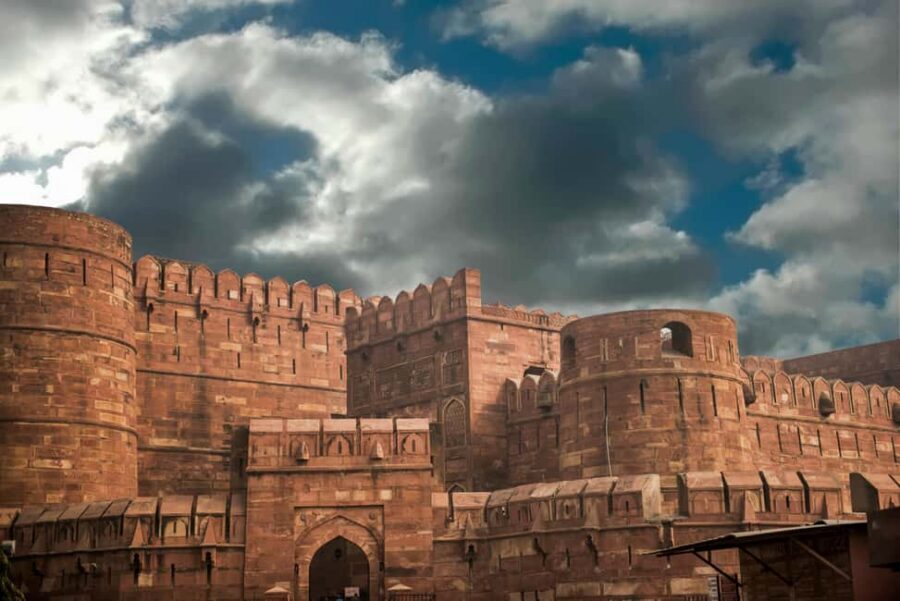
Agra Fort is one of those places where “seeing it” and “getting it” are two different things. Without context, it can feel like a big set of walls and hallways. With a guide, you start noticing the logic: who could move where, which rooms were for show, and which spaces were for control.
This is a short, 1-hour guided walk, which is exactly the right length for a first pass. You won’t cover every corner of the fortress, but you will hit the named stops that anchor the Mughal story and the architecture you came for.
You’ll also appreciate that the tour is private. That matters at a site like this, where you might want time to ask questions, pause for photos, or keep your group moving at a comfortable pace.
Other Agra Fort tours we've reviewed



Amar Singh Gate: the entry that sets the whole fort’s rhythm

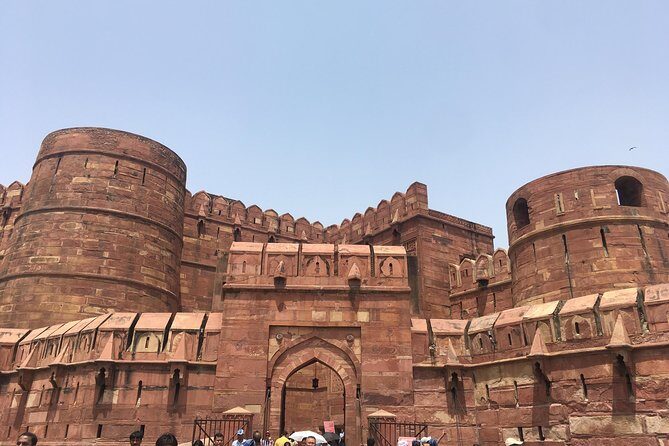
The tour starts at Amar Singh Gate, the sole entry for visitors. That first step is more than practical—it’s a visual clue to how the fort is organized and defended. Once you’re inside, your guide can point out the design choices that made the place both a military stronghold and a royal residence.
I like that this beginning gives you a mental map. Even in a short walk, you’ll understand why certain halls feel public and others feel more guarded. It’s the kind of orientation that helps you enjoy the rest of the fort instead of just drifting from doorway to doorway.
Mughal courts: how Diwan-i-Am and Diwan-i-Khas change the story
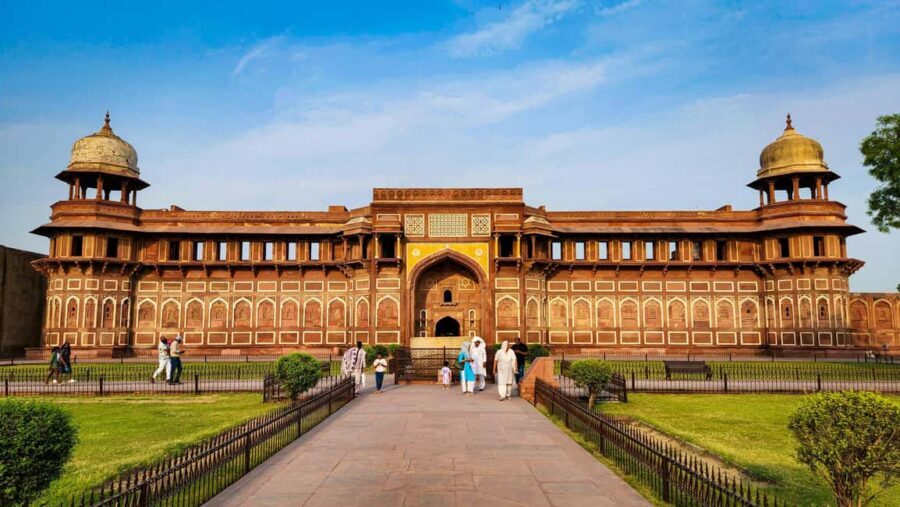
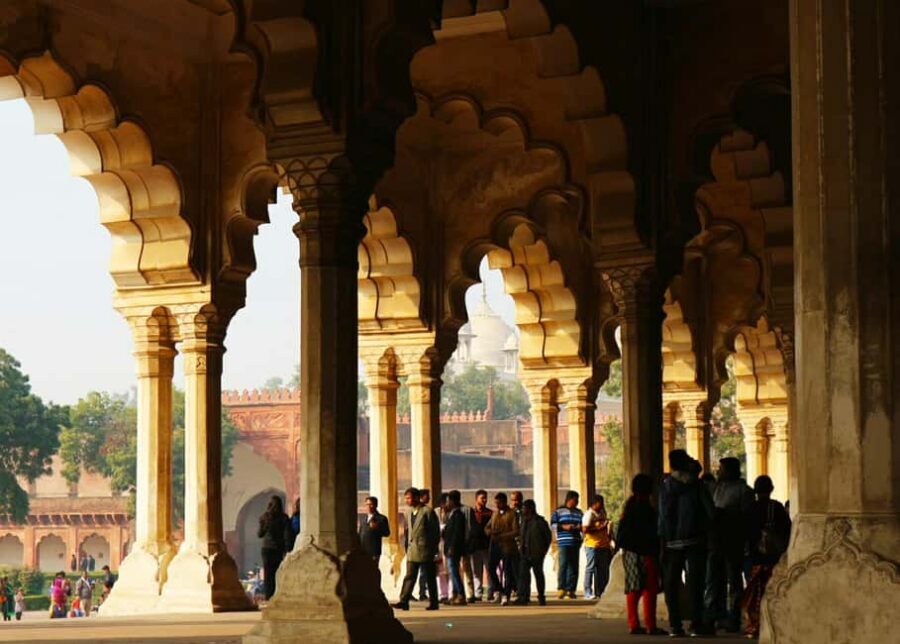
Next, you’ll move through the spaces tied to court life. The Diwan-i-Am is the public audience hall—where rulers could address subjects and perform power in front of people. Your guide’s job here is to help you visualize the ceremonies you can’t see today: where attention would land, where conversations likely happened, and why the layout mattered.
Then you’ll reach Diwan-i-Khas, the more private court. This is where the mood shifts. The architecture and design language feel more personal, like the emperor is speaking to a smaller circle rather than a crowd. If you’re interested in how empires used space like messaging, these two stops do it in a way you can actually feel.
Jahangiri Mahal and the blending of styles you can spot
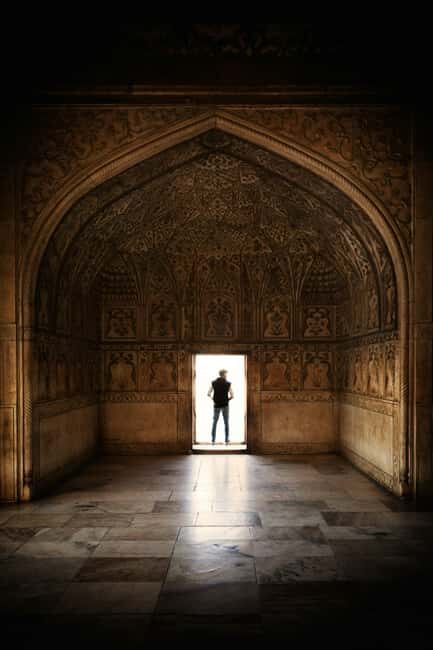
Agra Fort isn’t pure one-style architecture. It’s a mix—Rajput, Persian, and Islamic influences blending into Mughal forms. In the Jahangiri Mahal, your guide can connect those stylistic clues to the people and periods that shaped the fort.
This is a good moment to slow down. Even if you’ve seen Mughal architecture before, Agra Fort rewards close looking. You can often spot carved details, arches, and window-style features (including what visitors describe as jharokhas) that you might otherwise skip. The guide keeps it from turning into homework—you’re learning what to look for, not just hearing dates.
Where power turned personal: Shah Jahan, Aurangzeb, and a prison-linked spot
One of the most emotionally charged parts of this tour is the stop connected to Shah Jahan’s imprisonment by his son Aurangzeb. Being able to locate this in the fortress space helps you understand that Mughal power didn’t just live in celebrations. It also lived in confinement, succession struggle, and political survival.
I appreciate how guides handle this without turning it into a lecture. You get the core story and then you’re allowed to stand where the fortress makes the history feel physical. Even if you’re not a deep history nerd, this moment tends to land, because you can tell this place was designed for control.
Other walking tours we've reviewed in Agra






The Peacock Throne connection: why people mention it
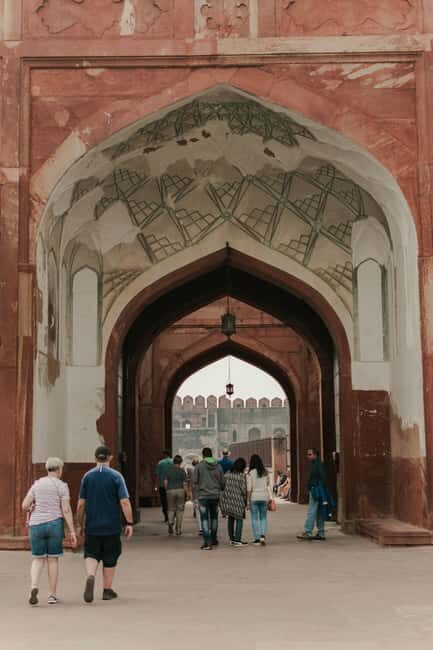
You’ll also hear about the famous Peacock Throne—legendary enough that it shows up again and again in Mughal discussions. This tour includes the spot where the Peacock Throne once dazzled onlookers, so you’re not just reading about it later. You’re standing near the idea of it, in the spaces that made grand spectacle possible.
This stop is also a nice reminder that Mughal rulers built more than buildings. They built stages. When you understand that, other details—like spacing in halls, sightlines, and decorative choices—start to make sense.
Musamman Burj: the bittersweet pause tied to the Taj view
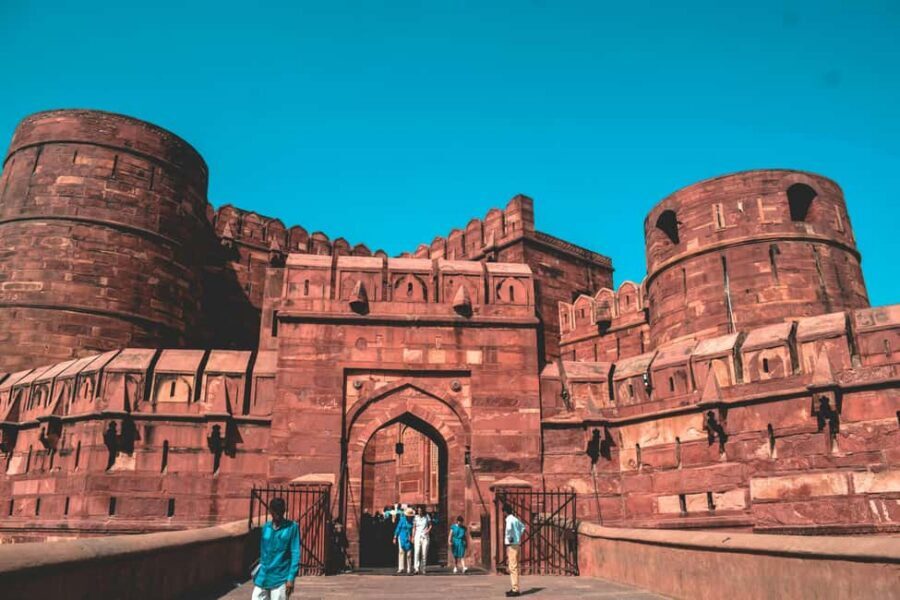
The Musamman Burj is a must for many visitors, and your guide explains why. This is where Shah Jahan spent his final days gazing at the Taj Mahal, a view that’s breathtaking and also painfully tied to the story of his captivity and decline.
Even with a short tour window, this is a good place to pause and let the symbolism settle. Your guide may point out the connection to seeing the Taj from within the fort complex—one of those practical geography facts that makes the history more real.
Mirrored palace (if accessible): reflections that feel like Mughal theater
The tour also includes the mirrored palace experience, but accessibility can vary. If you can enter, the effect is the point: light and reflection bouncing around in a space designed to impress.
Think of it like a special-effects room, built with materials and geometry instead of electronics. A mirrored interior doesn’t just look pretty. It amplifies presence. It makes people feel like they’re stepping into something curated and expensive—because, for Mughal elites, that’s exactly what they were doing.
If the mirrored palace isn’t accessible during your visit, you can still benefit from your guide’s explanation of the function and where it fits within the fort’s lifestyle spaces.
Anguri Bagh: geometric gardens and photo-ready calm
Finally, you’ll spend time around Anguri Bagh, the geometric gardens connected to Mughal royal life. Gardens like this weren’t only for pleasure; they were part of how rulers displayed order, taste, and control over nature.
Your guide can help you see the geometry as more than decoration. The layouts guide movement and viewing, and they create a rhythm that feels different from the fort’s stone corridors. It’s also where photos usually improve. You’ll have more open space, clearer angles, and a calmer visual background than inside the court halls.
What the best guides do differently (and why it matters)
In this fort, the difference between a mediocre and a great guide isn’t “more facts.” It’s how they help you avoid common frustration points.
I was encouraged by details from guides like Gagan and Shahid Khan, who were praised for clear communication, strong timing, and photo help. One recurring theme is safety: your guide should steer you away from scammy distraction tactics near the entrance area. That’s not small stuff. At a major heritage site, you can lose a whole chunk of your visit to hassling vendors and photographers trying to pull you into unwanted deals.
There’s also the pacing factor. With a tight one-hour experience, the guide has to manage the flow so you see the core places without sprinting. People specifically noted a good pace and patience—especially when groups run late—so you’re not just paying for a walk. You’re paying for someone to translate the place and keep it running smoothly.
Price and value: why $6 for a guided UNESCO walk is a smart move
At about $6 per person for a 1-hour private-group guide, this is one of those bargains that only makes sense if you think about opportunity cost. If you try to DIY Agra Fort, you’ll likely spend extra time figuring out what you’re looking at—and you’ll miss some of the story threads that make the named spots meaningful.
A guided tour helps you “read” the fort. You’ll understand why the Diwan-i-Am spaces feel different, how the prison-linked story fits the fortress, and what to look for in decorative details and garden geometry. For the price, that instruction is the real value.
The only caution is your own expectations. This isn’t a multi-hour deep excavation of every wall and passageway. It’s a smart sampler with the major anchor points done well.
Practical tips so your hour goes smoothly
Agra Fort’s scale is real. The tour data is clear: it’s huge, with uneven surfaces and lots of walking. Plan for that. Wear shoes you can move in comfortably, not just shoes that look good in photos.
Also expect bag checks at the entrance. Keep your bag light and easy to open. If you’re carrying anything large, the security line can slow you down.
Photography is allowed, and a camera is part of the suggested packing list. Drones and tripods are usually prohibited unless special permission is in place, so leave bulky gear at your hotel to avoid last-minute grief.
Pair it with Taj Mahal: the easiest same-day plan
Good news: the Taj Mahal is about 2.5 km away, so you can often fit both Agra Fort and the Taj in the same day without treating it like a logistical nightmare. If you’re choosing priorities, start with the fort if you want Mughal context first—then shift to the Taj with a deeper sense of the political story around Shah Jahan.
If your day is tight, use the fort tour as your “history spine” and then spend more time at the Taj focusing on viewpoint angles and light.
Should you book this Agra Fort guided walking tour?
Book it if you want the fast track to the sites that actually explain Agra Fort: Amar Singh Gate, the Diwan halls, the Jahangiri Mahal, the prison-linked history, Musamman Burj, and the garden spaces like Anguri Bagh. The short length is perfect if you also plan to see the Taj Mahal the same day.
Skip it if you’re the type who wants to wander for hours without guidance or you already know the fort inside out and don’t need help connecting the architecture to the story. Also, if you struggle with lots of walking on uneven ground, treat the one-hour route as “still a lot,” and bring the right shoes.
In most cases, though, this feels like a great deal: a well-paced guide-led pass through UNESCO Mughal landmarks for a price that won’t blow your budget.
FAQ
How long is the Agra Fort guided walking tour?
The tour lasts 1 hour.
How much does the tour cost?
It costs $6 per person.
Where do I get the meeting details for my guide?
You’ll receive the guide’s contact details from the local provider via WhatsApp (or by email if you don’t use WhatsApp) one day before your tour. The provider’s WhatsApp number is also listed on your booking voucher.
What languages are available for the live guide?
The live guide offers English and Hindi.
Is the tour private?
Yes, it’s listed as a private group.
What should I bring, and can I take photos?
Bring comfortable shoes and a camera. Photography is allowed, but drones and tripods are usually prohibited without special permission. Bag checks happen at the entrance, and no large bags or prohibited items should be brought.