REVIEW · AGRA
Taj Mahal Handicraft Walk: Explore True India with Artisans
Book on Viator →Operated by Agra Heritage Walks · Bookable on Viator
Agra has more than marble. This walk turns the Taj Mahal area into a living workshop trail where you meet artisans and see how Agra’s craft culture works in daily life.
I like that it’s timed for flexibility, and you’re not stuck on one rigid schedule. I also love the stop choices: zardozi (gold embroidery) and pietra dura marble inlay are both explained in a way that makes the skill feel real, not like a museum label. My guide Arhaan was clear and friendly, and he even added extra context on the way—exactly the kind of small touch that improves the whole experience.
One thing to consider: you’re walking around the Taj Mahal area, including 17th-century lanes, so you’ll want comfortable shoes and a little patience with street traffic and crowd flow near the monument.
In This Review
- Key highlights at a glance
- Walking the Taj Mahal area where locals actually live
- Getting oriented without getting trapped in crowds
- Stop 1: Zardozi gold embroidery in an older Taj Mahal-area workshop
- Stop 2: Marble inlay (Pietra Dura) and its connection to the Taj
- Stop 3: Flower garland and body jewelry in household lanes
- Stop 4: Marble prachinkari in a multi-generation workshop
- Stop 5: Carpetmaking household art and design evolution
- Price and what makes this good value
- How the pickup options affect your day
- What I’d pair it with in your Agra itinerary
- Who this tour suits best
- Should you book the Taj Mahal Handicraft Walk?
- FAQ
- How long is the Taj Mahal Handicraft Walk?
- Where does the tour start?
- Does the tour offer pickup?
- Is entry to artisans homes included?
- What crafts will I see during the walk?
- Is transportation included in the price?
- Are there different tour times during the day?
- Is this tour private?
- What kind of ticket will I use?
- What if the weather is bad?
- What is the cancellation window?
Key highlights at a glance

- Crafts in working households instead of only storefronts
- Zardozi workshop with hands-on style explanation of gold embroidery
- Pietra dura (marble inlay) taught with Taj Mahal connections
- Flower garland and body-jewelry homes showing how fresh-flower traditions shift over time
- Marble prachinkari workshop linked to pietra dura lineage
- Carpetmaking household art and how designs evolved through cultural mixing
Walking the Taj Mahal area where locals actually live
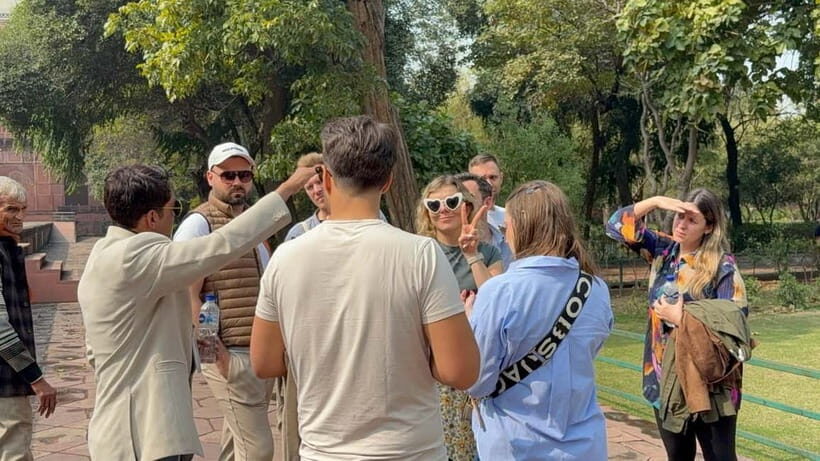
This isn’t a stand-around-and-take-photos kind of tour. It’s a focused handicraft walk built around where the work happens—workshops and home-based production near the Taj Mahal area. The payoff is that you get a different Agra picture fast: yes, the Taj is jaw-dropping, but craft skills are what keep the city’s identity moving.
You’ll start at The Orchid Retreat (Plot No 28, Taj Nagri Phase 1, Taj East Gate Road, Shilpgram Rd, Taj Nagari Phase 1, Telipara, Agra). Depending on the time you pick, you may have pickup by private car or tuk tuk, or you can choose the tour only. Either way, the experience is designed to keep you close to the action, then send you back to the meeting point at the end.
The duration is about 2 hours. That matters because it makes the tour easy to pair with a morning or afternoon Taj Mahal visit. If you’re doing the monument first, this is the perfect follow-up. It adds context—how artisans translated raw materials and patterns into something that became world-famous.
Other Taj Mahal tours we've reviewed in Agra



Getting oriented without getting trapped in crowds
The route is built to let you stroll around the Taj Mahal area away from the heaviest tourist crush. That sounds like a small detail, but it changes the whole mood. You’re not constantly dodging selfie lines. You can actually hear explanations from your guide and snap photos without that constant stop-and-go feeling.
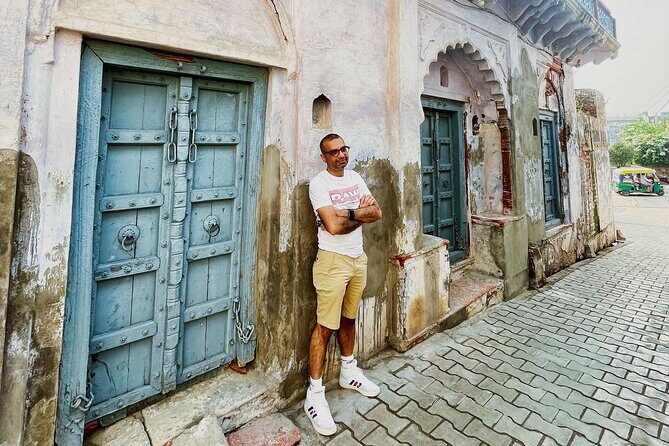
You’ll also be walking through older lanes—specifically, 17th-century lanes around Tajmahal. The name is romantic, but the practical value is real: narrow lanes mean you’re moving through neighborhoods where craft and daily life overlap. It’s the difference between viewing Agra and experiencing the texture of it.
If you’re someone who gets annoyed by “too much history, not enough clarity,” this will feel friendlier. You get brief, structured explanations at each stop, enough to understand what you’re looking at and why it matters, without drowning in trivia.
Stop 1: Zardozi gold embroidery in an older Taj Mahal-area workshop
Your first major craft stop is an old workshop of zardozi, the gold embroidery tradition. Zardozi is one of those crafts that can look magical from a distance—until you see the process and realize it’s precision labor.
Here’s what you should expect: your guide covers the history of the craft, plus the details and intricacies of craftsmanship. The goal isn’t to turn you into an embroidery engineer. It’s to help you recognize what’s skillful about the work—where careful control matters and why the final look takes time.
Why this stop is valuable: zardozi is an art form that feeds fashion and ceremonial decoration. When you learn how it’s made, you can shop smarter later. Instead of buying a souvenir that looks like gold shine, you can look for signs of workmanship.
Possible drawback: zardozi products can be tempting to purchase, but you’ll want to take a breath before impulse buying. The best approach is to ask what the item is made from and how it’s produced, then compare prices later in your trip. The tour is positioned as a way to shop at better value than typical store pricing, but still—good buyers stay calm.
Stop 2: Marble inlay (Pietra Dura) and its connection to the Taj
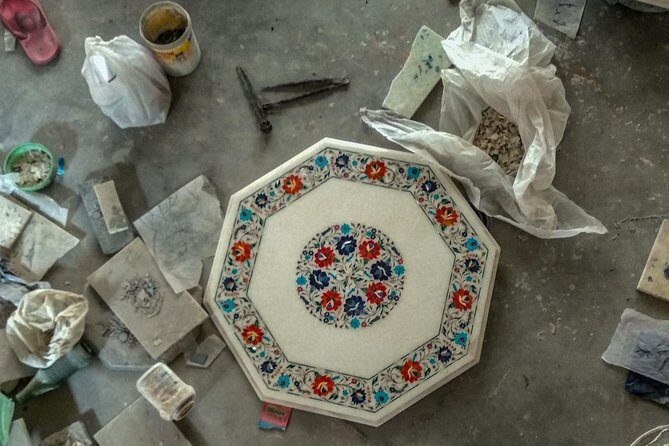
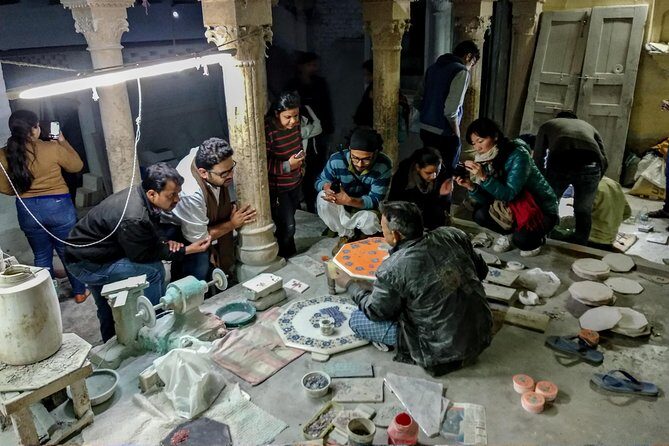
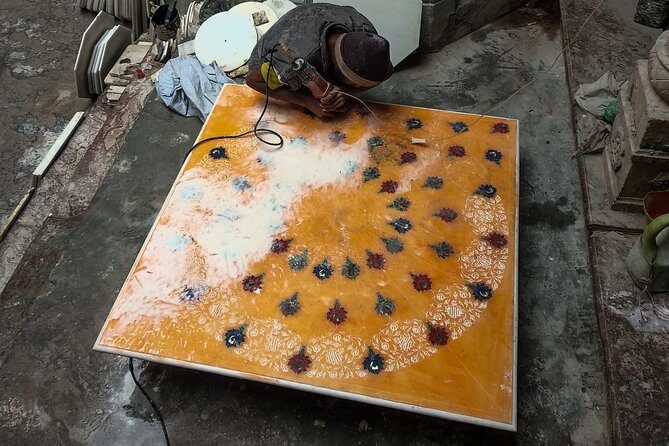
Next up is a marble inlay workshop (Pietra Dura). This is the craft people associate with the Taj Mahal’s ornamental surfaces, and you’ll get the story of how the inlay tradition began and grew.
You’ll learn how this craft ties into the history of the Taj Mahal, and you’ll hear that the artisans here are descendants of artisans who made the Taj Mahal. That’s a powerful detail because it links your visit to a living line of skills rather than a one-time historical project.
Practically, how do you benefit from this stop? You’ll start seeing the marble work differently afterward. Instead of treating it like decoration, you understand it as design planning plus precise cutting plus careful placement. Even if you don’t take a workshop class, the explanation makes the craftsmanship easier to spot on the monument.
Shopping note: If you’re hoping to bring home something from Pietra Dura, bring your “close inspection” mindset. Look for alignment and finishing, and ask about materials and thickness if you can. Your guide can help with what to ask.
Stop 3: Flower garland and body jewelry in household lanes
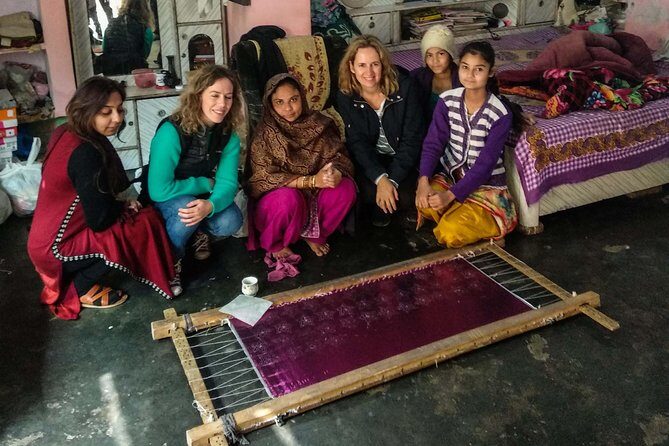
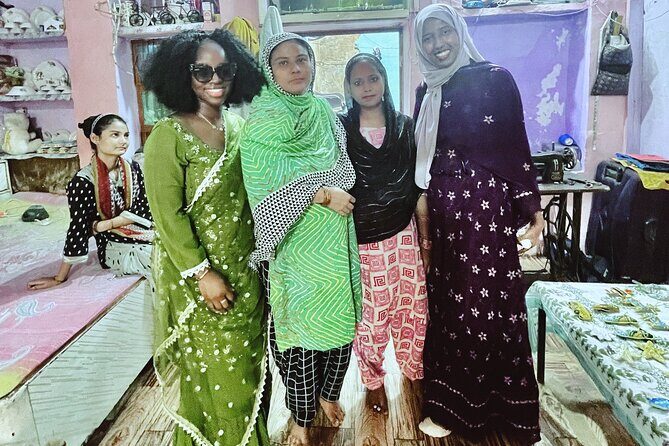
Then the tour shifts from workshop craft to household craft. You’ll walk down those older lanes and visit homes where people create garlands and other body jewelry made with fresh flowers.
This stop is one of the more memorable parts, because it’s not only about making. It’s about how culture changes. You’ll get a brief explanation of how the use of fresh flowers has changed over time, and how those changes affect the industry.
Why I think this matters: it adds realism. Handicrafts don’t exist in a bubble. They adapt to demand, availability, and everyday habits. Seeing how a home-based practice works also makes the entire Taj-to-artisans story feel less like a brochure and more like a neighborhood economy.
Photo tip: you’ll likely be surrounded by colorful setups. Keep your camera ready, but be respectful. If someone pauses their work to answer a question, give them that moment. It’s a small gesture that helps the exchange feel human rather than transactional.
Other specialty and female-guided tours in Agra





Stop 4: Marble prachinkari in a multi-generation workshop
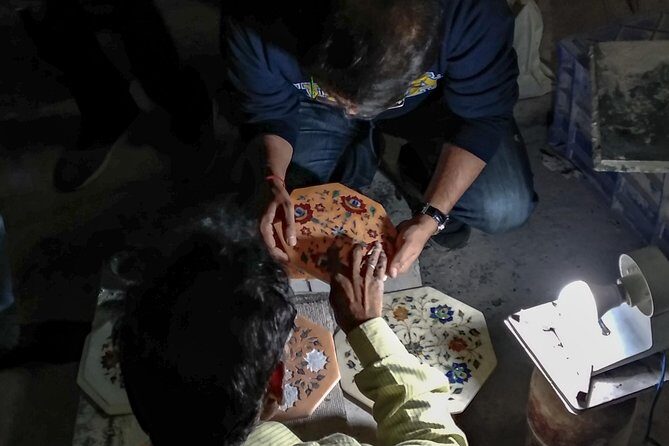
After the flower-home stop, you’ll visit a three-generation old workshop of Marble Prachinkari. This is another marble-focused craft, but it’s not presented as a repeat of what you already saw.
You’ll learn about the connection between prachinkari and Pietra Dura, which helps you understand how craft traditions influence each other. The “three-generation” detail matters because it gives you a sense of continuity: this isn’t just a technique. It’s a family skill passed down and refined.
What to look for here: treat it like a skill conversation. If you can, ask your guide to point out the differences you’re seeing between the marble crafts. That way, you don’t just walk through multiple workshops—you actively learn what separates them.
If you’re planning purchases later, this is a good time to gather your questions. By this point, you’ll know which craft styles match your taste and which ones are more “showpiece” than “everyday wearable or usable.”
Stop 5: Carpetmaking household art and design evolution
The final craft segment focuses on carpetmaking in a household setting. The explanation includes how present-day designs evolved through cross-community acculturation.
This part is valuable because it connects craft to people moving ideas around. Carpets are often treated like products, but they’re also visual records of cultural exchange—patterns, motifs, and influences that travel and blend.
Even if you don’t buy a carpet (and most people don’t in a 2-hour walk), you’ll leave with better pattern sense. You’ll know what to look for when you spot design similarities across different shops. And if you do want a small textile item, you’ll likely understand the “why” behind the style.
Price and what makes this good value
At $15.88 per person for about 2 hours, this is positioned as a low-stress way to access craft expertise plus entry to artisans homes—and that access is usually what raises the real cost of experiences like this.
What you’re getting for the price:
- A guide (not just a driver)
- Stops at multiple craft environments, including households
- Entry into artisan homes/workspaces
What’s not included:
- Private transportation (pickup is optional depending on your selection)
So is it worth it? In my view, yes—especially if you care about buying souvenirs intelligently. This walk is set up for one of the smartest travel habits: learn first, shop second. When you understand what a craft actually takes, you can judge quality and avoid the “cheap-looking-but-expensive” traps.
How the pickup options affect your day
You can choose between pickup by private car or tuk tuk, or you can go with the tour only option. If you’re pairing this with a Taj Mahal visit, pickup can help you time everything neatly and keep the day from turning into logistics.
If you prefer independence, tour-only can work because you’ll start and end at a clearly defined meeting point. Also, the meeting location is near public transportation, which gives you an alternative if you’re on a tight schedule.
What I’d pair it with in your Agra itinerary
This tour works best right after you do the Taj Mahal. The monument makes you wonder how something this detailed got built. The handicraft walk then explains how the craft mindset survives beyond construction—through living artisans.
It also pairs well with other non-museum Agra plans, like:
- A meal break near your next stop
- A shopping session right after your understanding has sharpened
Think of it like turning on a second set of eyes. You’ll look closer at patterns and materials, and you’ll buy with more confidence.
Who this tour suits best
This is ideal if you:
- Want authentic, artisan-based culture rather than only monument photos
- Like meeting real makers and asking questions
- Want a short activity that adds meaning to your Taj Mahal day
- Are interested in specific crafts like zardozi, pietra dura, prachinkari, flower garlands, and carpet design
It’s also a solid choice if you travel with just a small group, since it’s private in the sense that only your group participates.
If you hate walking at all, or you expect a fully seated experience, this probably won’t feel right. It’s a walking tour by design.
Should you book the Taj Mahal Handicraft Walk?
Yes, if you want to understand Agra beyond the Taj Mahal silhouette. The standout value is the mix of workshops plus artisan homes, plus clear craft explanations tied to the monument itself. For a short 2-hour time investment, you gain real appreciation—and you’ll shop more smartly if souvenirs are on your list.
If you’re only interested in big-ticket sights and you’d rather stay strictly in tourist lanes, you might feel underwhelmed. But if you like meeting people where their work happens, this walk delivers.
FAQ
How long is the Taj Mahal Handicraft Walk?
It runs for about 2 hours (approx.).
Where does the tour start?
The start point is The Orchid Retreat (Plot No 28, Taj Nagri Phase 1, Taj East Gate Road, Shilpgram Rd, Taj Nagari Phase 1, Telipara, Agra).
Does the tour offer pickup?
Pickup is offered, with options listed as private car or tuk tuk. You can also choose the tour only option.
Is entry to artisans homes included?
Yes. The tour includes entry to artisans homes.
What crafts will I see during the walk?
You’ll visit workshops focused on zardozi (gold embroidery), marble inlay (Pietra Dura), marble prachinkari, and you’ll also see household craft work related to fresh flower garlands/body jewelry and carpetmaking.
Is transportation included in the price?
Private transportation is not included.
Are there different tour times during the day?
Yes. You can choose from several tour times throughout the day for flexibility.
Is this tour private?
It’s private/activity-based, meaning only your group participates.
What kind of ticket will I use?
A mobile ticket is included.
What if the weather is bad?
The experience requires good weather. If it’s canceled due to poor weather, you’ll be offered a different date or a full refund.
What is the cancellation window?
You can cancel up to 24 hours in advance for a full refund.