REVIEW · AGRA
New Delhi: Akshardham Temple Tour with Water and Light Show
Book on GetYourGuide →Operated by Zaara Travels · Bookable on GetYourGuide
An evening show, a temple tour, and real stories. I like how this route pairs the Sahaj Anand Water Show with guided time inside Akshardham, so you’re not just watching lights—you’re understanding the themes behind them. You’ll also get the kind of detail that’s hard to catch on your own, including the 20,000 gods and goddesses carved into the temple walls. The one drawback: in 4–6 hours you’ll cover a lot of ground, so it’s best if you’re okay with a packed schedule and a quick pace.
Pickup is the comfort win here, with options across Noida, Ghaziabad, Gurugram, Aerocity, Old Delhi, and more. And the human part matters: guides like Anmol Choubey (Italian) have been praised for going beyond facts and adding context, while Anil and Zeeshan were also highlighted for being excellent and helpful.
In This Review
- Key Highlights You’ll Actually Feel
- Why This 4–6 Hour Akshardham + Water Show Plan Works
- Pickup All Over Delhi: Comfort Before You Even Start
- India Gate and Rajpath: Ceremonial Delhi at a Viewing Pace
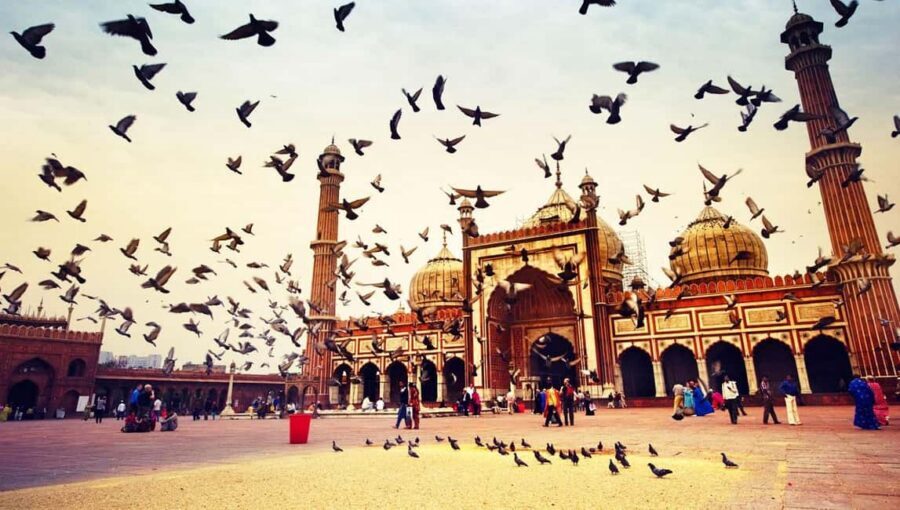
- Old Delhi Stops: Jama Masjid and Chandni Chowk With a Guide’s Time
- Rashtrapati Bhavan From the Outside: Quick, Useful, and Honest
- Akshardham Main Visit: Exhibitions, Carving Detail, and Guided Meaning
- Sahajanand Darshan, Neelkanth Darshan, and Sanskruti Darshan
- The 12-Minute Cultural Boat Ride: Short Time, Clear Takeaway
- The Sahaj Anand Water Show: Lasers, Underwater Flames, and Sound
- Comfort, Timing, and What You Should Bring
- Value Check: Is $23 Really Fair for This Much Content?
- Should You Book This Akshardham Temple Tour With Water and Light Show?
- FAQ
- How long is the Akshardham Temple Tour with the water and light show?
- What’s included in the tour price?
- Do you provide skip-the-line access?
- Where will the tour pick up and drop off?
- What should I bring for the tour?
- Is this tour wheelchair accessible and is it suitable during pregnancy?
Key Highlights You’ll Actually Feel
- Sahaj Anand Water Show: a 24-minute Light & Water performance with lasers, projections, underwater flames, and surround sound
- Akshardham’s multimedia Darshan: Sahajanand, Neelkanth, and Sanskruti storylines told through exhibits and video
- The 20,000-figure carvings: a wall of gods and goddesses that you’ll notice more with a guide
- Cultural boat ride (12 minutes): a short sail through Vedic-era history and major contributions
- Skip-the-line entry option: you use a separate entrance instead of queueing forever
- Guided Old-to-New Delhi flow: Jama Masjid, Chandni Chowk, India Gate, and Rajpath, without getting lost
Why This 4–6 Hour Akshardham + Water Show Plan Works
This tour is built like a day with two faces: daytime Delhi landmarks, then a spiritual finish with high-production storytelling. The timing is the secret. By starting with sights and then moving into Akshardham’s exhibitions, you arrive ready to connect the evening show to what you just saw.
At $23 per person, it’s also one of those prices where you should ask: what’s the value? You’re getting air-conditioned transportation, hotel pickup and drop-off, a guide, and (if you choose the option) entry tickets. Add in the big two-ticket moments—the exhibition experience plus the 24-minute water show—and it starts to look like more than a basic sightseeing loop.
Keep your expectations realistic. This is not slow travel. You’re moving through multiple stops, and you’ll spend time walking and standing. If you like long rests between sights, you’ll want to pair this with a calmer next day.
Other Delhi to Agra day trips



Pickup All Over Delhi: Comfort Before You Even Start

The tour starts with pickup from a long list of places, including Noida, New Delhi, Old Delhi, Aerocity, Gurugram, Faridabad, Ghaziabad, and Greater Noida. That matters because Delhi traffic can be unpredictable, and it’s stressful to add your own transport on top of a timed day.
Once you’re collected, your guide meets you and keeps the flow organized. You won’t be stuck figuring out where to stand, when to move, or how to transition between areas. It’s also helpful that umbrellas, mineral water, and a water bottle are included—small things that make a hot or slightly rainy day easier.
One more practical note: you’ll need a passport or ID card. And alcohol and drugs are not allowed on the experience. So pack smart, and keep it simple.
India Gate and Rajpath: Ceremonial Delhi at a Viewing Pace
After pickup, the route begins at India Gate, Delhi’s war memorial and a major landmark. You get a guided introduction plus a short sightseeing window. This stop is short on purpose. India Gate works best when it’s a quick orientation point that sets the tone for the rest of the tour.
Next comes Rajpath, the ceremonial avenue leading toward Rashtrapati Bhavan and Parliament House. Here, you can’t go inside, but you can admire the grandeur from outside. I like this approach for first-time visitors because you get the visual scale without waiting for entry or getting stuck in crowd bottlenecks.
The guiding value at this stage is context: why this axis matters, what you’re looking at, and what to notice when the architecture feels similar to other big-city landmarks. It also helps you pace yourself. You’re not burning all your energy in the first hour.
Old Delhi Stops: Jama Masjid and Chandni Chowk With a Guide’s Time
The itinerary then turns toward Old Delhi with Jama Masjid followed by Chandni Chowk. You’ll get guided time at Jama Masjid (including sightseeing and shopping time), then another guided sightseeing stop at Chandni Chowk for about an hour.
What you’ll like here depends on your travel style. If you enjoy classic market energy and prefer to shop with structure, this is a good match. If you’d rather photograph more than bargain, the guided format still helps because it prevents you from wandering too long without a plan.
The main consideration is obvious once you’ve been in Delhi: Old Delhi can be crowded and active. In a tour like this, you’re there for about an hour per stop, so you get a taste without losing half your day. Wear shoes you can move in comfortably and keep your phone secured when you’re in busier lanes.
Rashtrapati Bhavan From the Outside: Quick, Useful, and Honest
You’ll also pass the Rashtrapati Bhavan area on the way. The tour includes guided sightseeing, but you can’t enter. That honesty matters. With big landmark days, it’s easy to waste time chasing entries that never happen.
I like the outside viewing because it keeps the day efficient. And it sets up a visual contrast that makes Akshardham feel even more distinct later. Government avenue Delhi has its own mood. Akshardham’s campus has another. You’ll feel the shift when you move.
A few more Agra tours and experiences worth a look

Akshardham Main Visit: Exhibitions, Carving Detail, and Guided Meaning
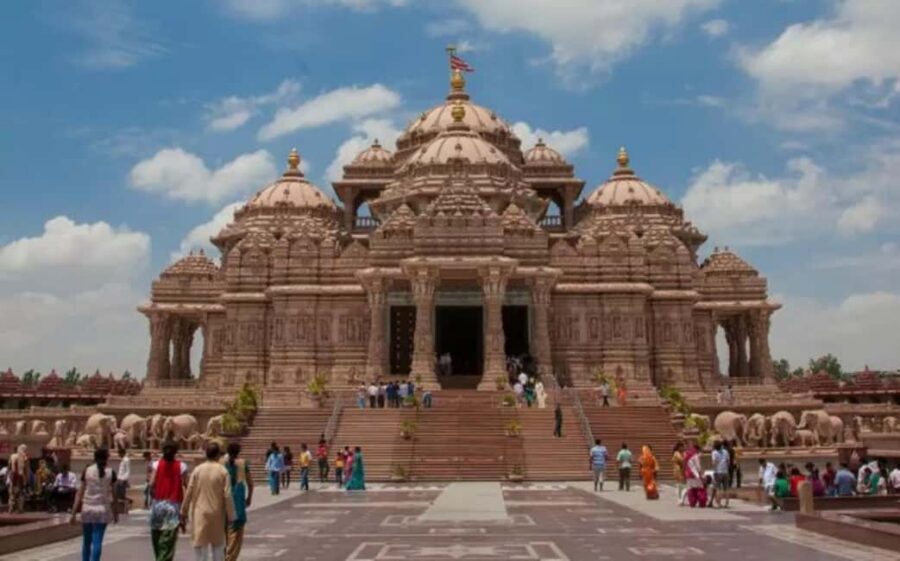
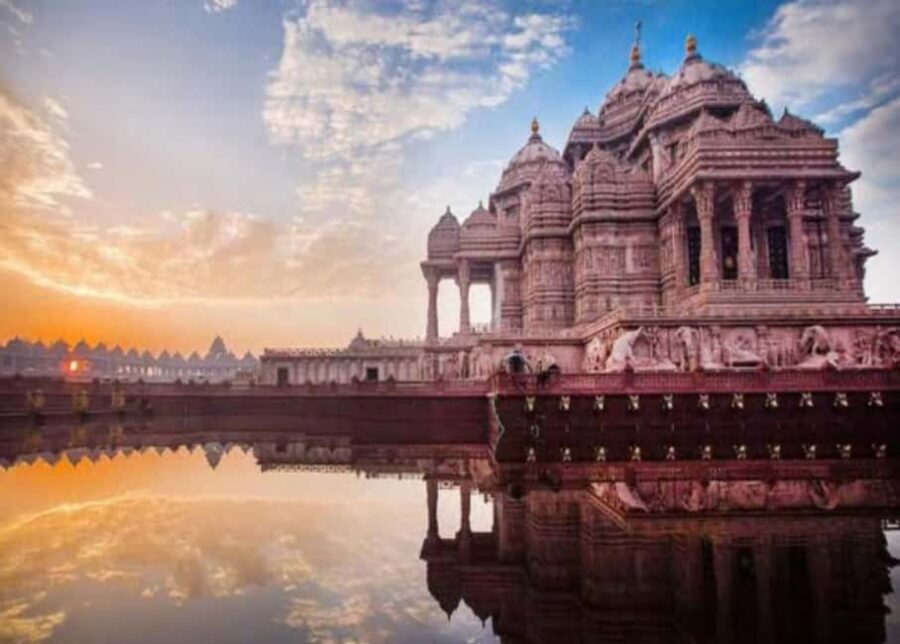
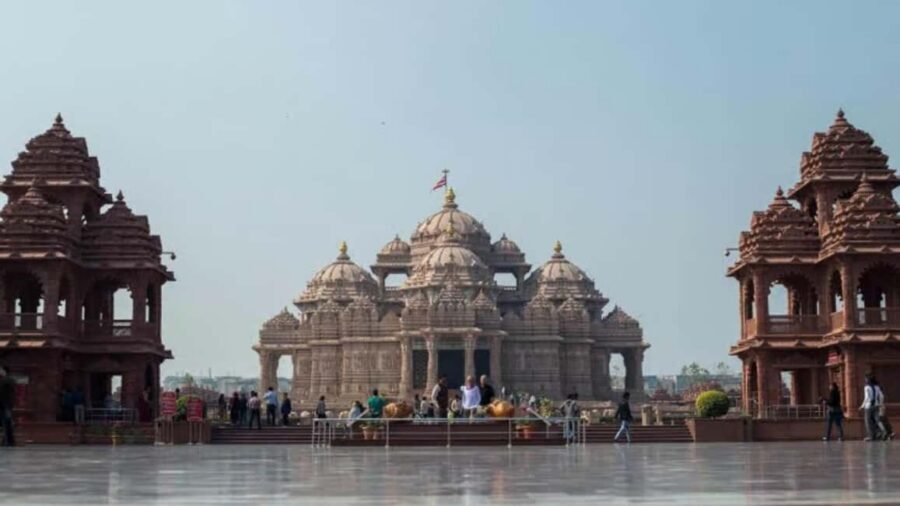
Akshardham is where the tour starts to feel like more than a checklist. You’ll have about two hours for the main guided visit and sightseeing inside the complex.
One of the headline details is the scale of the carving work—20,000 gods and goddesses carved into the walls. On your own, you’d likely spot a few panels and move on. With a guide, you get help noticing what’s carved where and why it matters, and you can slow down just enough to actually see.
You’ll also spend time in the temple’s Exhibition area, which is designed to connect stories and values with multimedia presentation. This is where the tour becomes “spiritual tour” in a practical way, because you’re not just reading plaques. You’re moving through exhibits that use video and other presentation styles to build a message.
If you’re short on time, the skip-the-line option (via a separate entrance) can be a big win. It’s one less uncertainty when you’re aiming to reach the evening show.
Sahajanand Darshan, Neelkanth Darshan, and Sanskruti Darshan
Inside the exhibition, you’ll meet three major story sections, and they each give you a different entry point.
Sahajanand Darshan uses exhibits that focus on values such as non-violence, perseverance, prayers, morality, and family harmony. The key idea I’d take from this for your own trip: the content is structured to be understandable even if you’re not steeped in the background. You’re guided through a moral framework using multimedia formats.
Neelkanth Darshan presents Neelkanth Varni on an epic trek across the subcontinent—spanning about 12,000 kilometers from the northern Himalayas to southern beaches. The themes are sacrifice and service, faith, and the idea of the eternal soul. For me, this is the most “movement-based” story section. It gives you a travel narrative, even though you’re standing inside.
Sanskruti Darsham (the tour uses this name as the third section) focuses on culture, shown through a Cultural Boat Ride and a multimedia presentation of ancient Indian history. This part is meant to show everyday life themes, not just mythology.
The value of this three-part format is pacing. You’re not stuck with one long lecture-style experience. Instead, you get different styles of storytelling: values, journey, and culture through a short ride.
The 12-Minute Cultural Boat Ride: Short Time, Clear Takeaway
One of the best “I’m glad this is included” moments is the Cultural Boat Ride, lasting about 12 minutes. You board a boat and sail through thousands of years of ancient Indian history, with a focus on Vedic-era lifestyle.
What makes this useful is how short it is. You’re not committing to a long attraction that eats your whole evening. You get a moving viewpoint and a thematic overview, and then you can return to the rest of the exhibitions without feeling drained.
The ride is also described as showing cultural milestones, including passing by the oldest university and even a depiction of eye surgery happening more than a thousand years ago. Even if you treat these as educational show elements rather than documentary footage, it’s still a sharp way to connect past and present in a way that feels memorable.
The Sahaj Anand Water Show: Lasers, Underwater Flames, and Sound
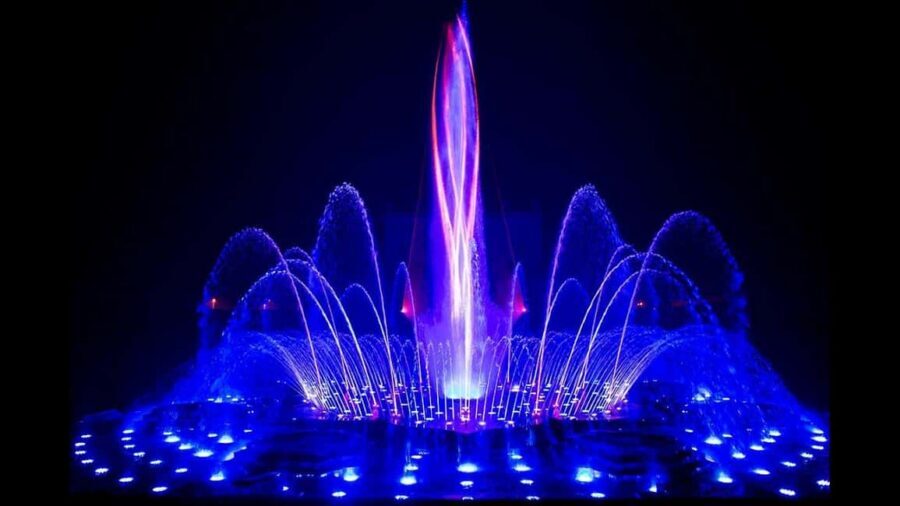
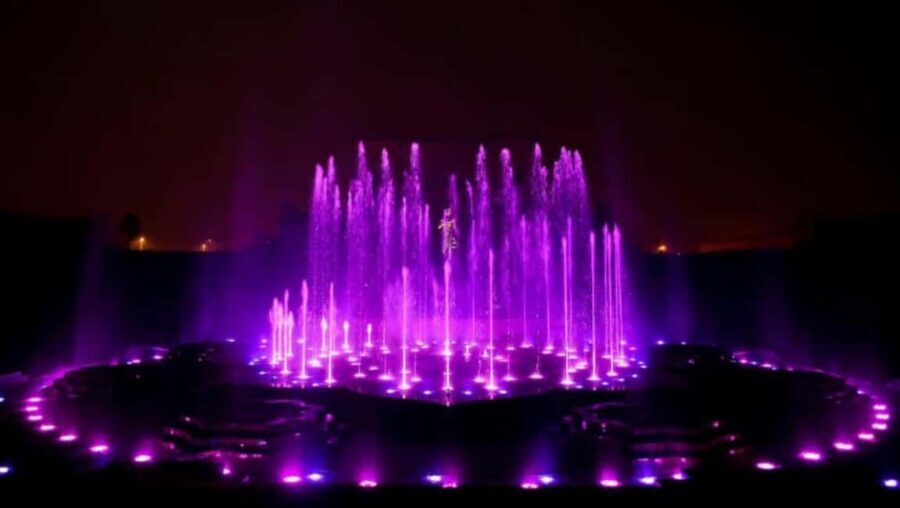
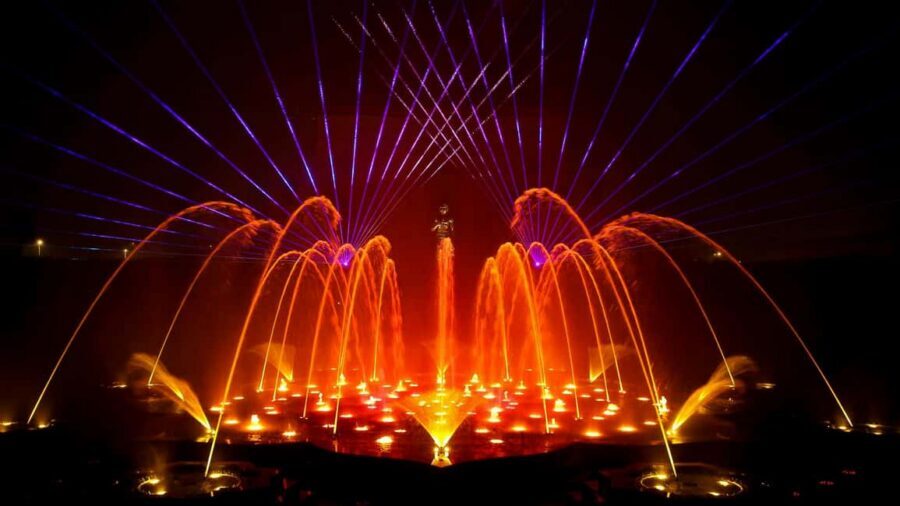
Then comes the big finale: the Sahaj Anand Water Show, a 24-minute Light & Water performance inspired by the Kena Upanishad. This is the part that many people will remember because it’s sensory and production-heavy.
The show includes multi-color lasers, video projections, underwater flames, water jets, and surround sound. That mix means you’re not just watching a screen. You’re seeing choreography in the water, light that changes with the narrative, and audio that helps you follow the story even if you don’t catch every reference.
Here’s a practical tip: arrive with enough time to get a comfortable viewing angle, and don’t plan to wander off during the show. This is one of those experiences where you want to watch the sequence start to finish.
If you’re sensitive to bright lights or strong sound, consider bringing ear protection. The show uses surround sound, and the underwater flame visuals can be intense for some people.
Comfort, Timing, and What You Should Bring
This is a 4–6 hour experience, so plan the rest of your day accordingly. You’ll start with a pickup, then multiple city stops, then Akshardham exhibitions, then the evening show, then drop-off back to your hotel.
Because it’s timed and transport-included, I recommend you don’t schedule something tight immediately before or after. Give yourself buffer space for traffic delays and for the natural “standing and walking” rhythm of sightseeing.
What’s provided:
- Air-conditioned transportation
- Hotel pickup and drop-off
- Tour guide
- All tolls, taxes, parking fees
- Mineral water and bottled water
- Umbrellas
- Entry tickets if you select the option
- Lunch if you select the lunch option
What to bring:
- Passport or ID card
And remember the rule: alcohol and drugs are not allowed.
Wheelchair accessibility is listed as available, which is a big plus if you need that level of support. Pregnant women are listed as not suitable, so if that applies to you, choose an alternate plan.
Value Check: Is $23 Really Fair for This Much Content?
For many Delhi tours, the price covers transport and a guide, and you end up paying separately for the big attractions. Here, the base price gets you a lot of structure: pickup, guided sightseeing across multiple landmarks, Akshardham time, and a dramatic evening show.
Your best value decision is choosing whether to include entry tickets and lunch. If you want the simplest all-in day, selecting those options can help you avoid last-minute spending and uncertainty. If you already have some tickets, you might compare what you truly need.
Also notice what you’re paying for beyond entry: time saved by skip-the-line entrance (when selected), plus a guide who can connect the content inside the exhibitions to what you’re seeing in the complex.
And yes, you’re paying for the show. In a day that might otherwise feel like “temple visiting in daylight,” the evening performance turns it into a complete arc.
Should You Book This Akshardham Temple Tour With Water and Light Show?
Book it if you want a well-structured day that ends with a high-impact show. This works especially well for first-time Delhi visitors who don’t want to plan transport, find entrances, or manage timing across multiple sites.
Skip it or rethink it if you hate packed schedules. In 4–6 hours you’re covering several distinct areas, and that pace isn’t for everyone. Also, if you’re pregnant, this one isn’t listed as suitable.
If you do book, you’ll get the best experience by leaning on the guide. This tour isn’t just about standing in front of things; it’s about understanding the themes behind the Sahajanand and Neelkanth storylines and then seeing how those ideas shift into the visuals of the Sahaj Anand Water Show.
FAQ
How long is the Akshardham Temple Tour with the water and light show?
The duration is listed as 4 to 6 hours.
What’s included in the tour price?
Inclusions include air-conditioned transportation, hotel pickup and drop-off, a tour guide, all tolls/taxes/parking fees, mineral water, and umbrellas. Entry tickets are included if you select the entry option, and lunch is included if you select the lunch option.
Do you provide skip-the-line access?
Yes. The tour notes skip the line through a separate entrance.
Where will the tour pick up and drop off?
Pickup is listed from Noida, New Delhi, Gurugram, Old Delhi, Faridabad, Ghaziabad, Greater Noida, and Delhi. Drop-off is listed for Ghaziabad, Faridabad, Old Delhi, New Delhi, Gurugram, Noida, Greater Noida, and Delhi.
What should I bring for the tour?
Bring a passport or ID card.
Is this tour wheelchair accessible and is it suitable during pregnancy?
Wheelchair accessibility is listed as available. The tour is listed as not suitable for pregnant women.