REVIEW · AGRA
From Delhi: Private 2-Day Golden Triangle Luxury Tour
Book on GetYourGuide →Operated by Crystal India Holidays · Bookable on GetYourGuide
Two days, three icons, no guesswork. This private luxury Golden Triangle run ties together sunrise at the Taj Mahal with Agra Fort and then full-day Jaipur, all with pickup and drop from your Delhi-area location. It’s the kind of trip that helps you see the big names without turning your vacation into a transport puzzle.
I love two things most. First, you get private guided tours with a live guide who helps you handle entrance fees, so you’re not stuck wasting time. Second, the professional driver and comfortable car make the long Delhi–Agra–Jaipur loop feel manageable, with bottled water provided during transfers and sightseeing.
One thing to consider: the driving days are long, and sunrise means a very early pickup. If you choose the 2:30 am start, plan on a packed schedule that favors efficiency over slow sightseeing.
In This Review
- Key things that make this tour work
- A real 2-day plan from Delhi: what fits, what feels rushed
- Taj Mahal at sunrise: the payoff and the early-morning cost
- Agra Fort: where the Mughal story gets physical
- Jaipur’s overnight base: Fern Residency or the big-name 5-star option
- Jaipur Day 2: the key sights in the order that makes sense
- Panna Meena ka Kund photo stop
- Amber Fort: the Hindu–Mughal mix you can actually see
- Jal Mahal at Lake Man Sagar: the “out of the way” pause
- Gatore Ki Chhatriyan: serene royal cenotaphs
- Hawa Mahal: the Palace of Winds as an image-maker
- Jantar Mantar: astronomy made visible
- City Palace: the royal family’s home base
- Lunch, then back to Delhi by around 9 pm
- Private driver and multilingual guides: why the experience feels smooth
- Price and value: is $140 per person worth it?
- What to know before you go (so your mornings don’t fall apart)
- Who this tour suits best
- Should you book this 2-day luxury Golden Triangle tour?
- FAQ
- FAQ
- What’s the pickup like for this Delhi to Golden Triangle tour?
- Can I visit the Taj Mahal at sunrise?
- What languages are available for the live tour guide?
- How are hotel choices handled?
- Are the monument entrance fees handled during the tour?
- What time will I be back in Delhi on the second day?
Key things that make this tour work
- Sunrise Taj Mahal option with pickup timed for an early start (2:30 am if you want sunrise)
- Guides handle entrance fees, helping you avoid long waits at monuments
- Private, multilingual live guide (Spanish, English, French, German, Russian)
- Luxury hotel choice (4-star Fern Residency or similar, or 5-star InterContinental/Hilton or similar)
- Full day in Jaipur on Day 2, then back to Delhi around 9 pm
A real 2-day plan from Delhi: what fits, what feels rushed
This itinerary is built like a sprint: Day 1 is Delhi → Agra → Jaipur, and Day 2 is the heavy Jaipur sightseeing sweep followed by the return drive to Delhi. It’s a smart fit if you’re short on time and want the classic Golden Triangle highlights, without the hassle of finding tickets, coordinating guides, or negotiating transport between cities.
Day 1 starts with pickup from your hotel or an address in Delhi, Noida, or Gurugram. You’ll head toward Agra, tour the Taj Mahal (with the sunrise option if you chose it), then continue to Agra Fort before driving to Jaipur for an overnight stay.
Day 2 begins after breakfast and moves through Jaipur’s major sights in a tight route. You’ll have time for lunch at a local restaurant, then you’ll drive back to Delhi and get dropped off at your chosen location around 9 pm.
The biggest “value” of this schedule is that it turns two separate travel days into one coherent loop. The trade-off is that you’re always moving, and you won’t have much breathing room if you want to linger for hours at each stop.
Other Delhi to Agra day trips



Taj Mahal at sunrise: the payoff and the early-morning cost
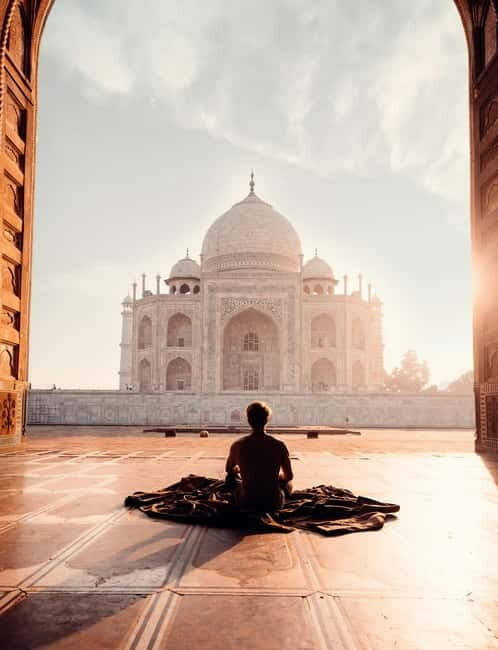
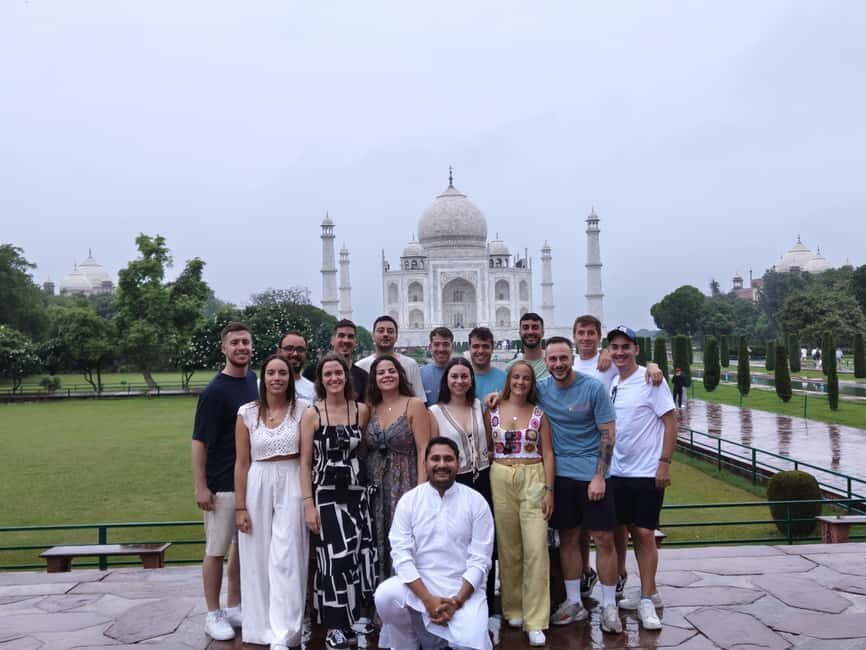
Seeing the Taj Mahal in early light changes the whole vibe. The sunrise option isn’t just a romantic idea; it’s also practical. Cooler morning hours tend to make the walking feel easier, and the atmosphere is often calmer than later in the day.
If you pick the 2:30 am pickup time, you’ll be there for sunrise. That’s a real commitment. You’ll want to be ready to go—water-proof your sleep schedule, not your passport. (Speaking of which: you need a current valid passport on the day of travel.)
Another point I appreciate here is how the logistics are handled. Your guide helps you buy entrance fees, so you’re less likely to lose time in queues. You’re still going to follow the flow of a major monument, but the goal is to reduce the waiting and keep you focused on what you came to see.
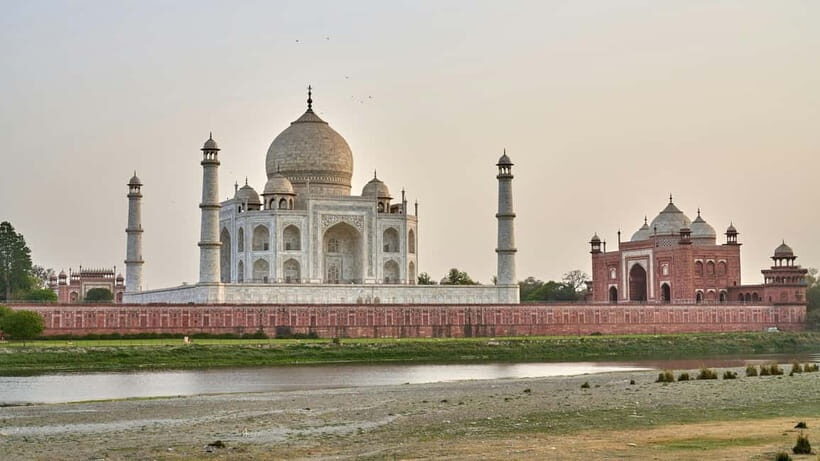
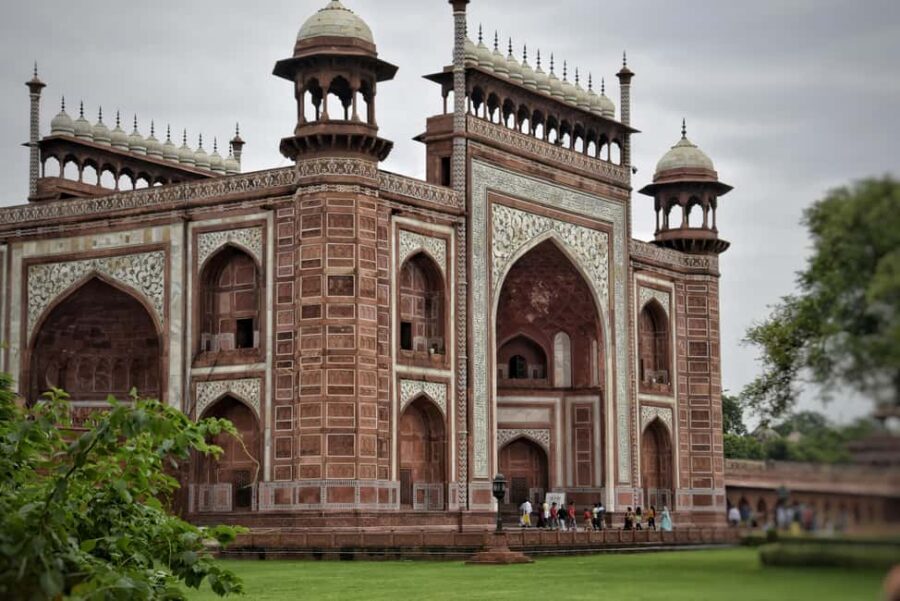
What to expect on site: the Taj Mahal is an iconic masterpiece of Mughal architecture, and the sunrise timing lets you see its details with softer light. Even if you’ve seen photos before, the scale and symmetry hit differently when you’re standing there before the day gets busy.
Agra Fort: where the Mughal story gets physical
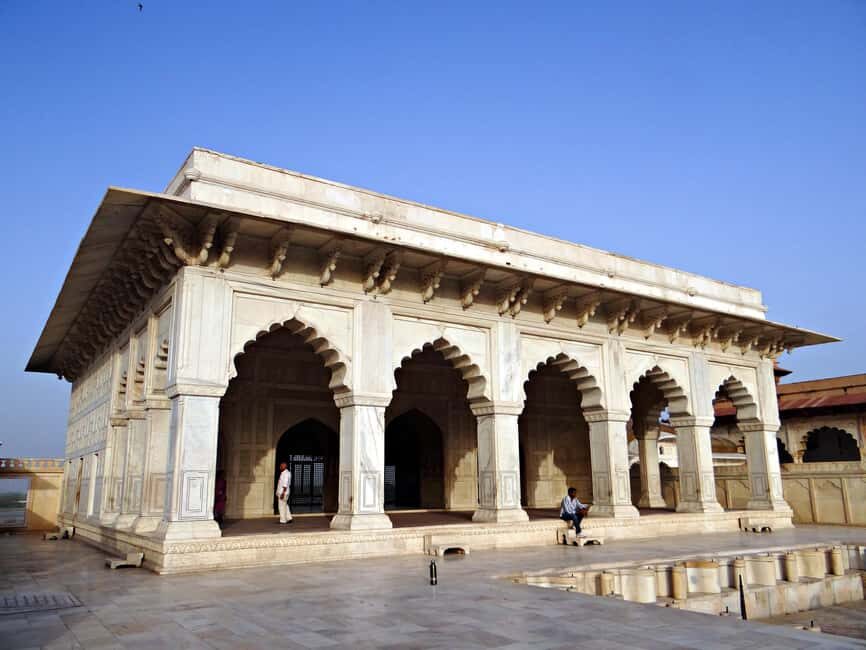
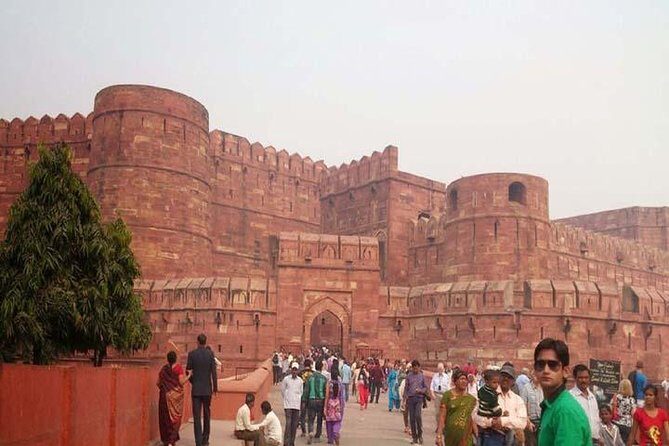
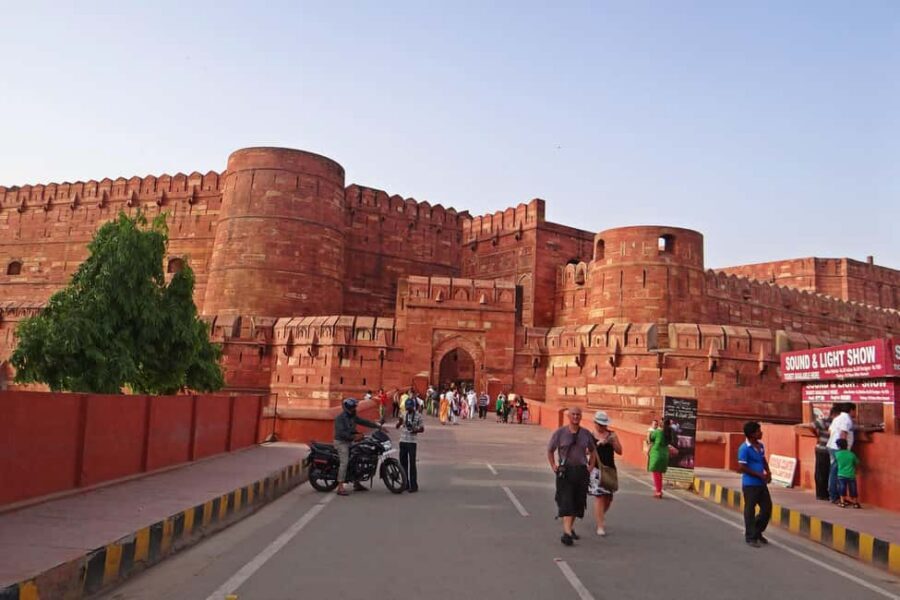
After the Taj Mahal, you’ll head to Agra Fort, a UNESCO World Heritage Site and once the main residence of the Mughal emperors. If you’re already impressed by the white marble landmark, this is the stop that grounds the story in power and daily life.
Agra Fort is often less “pose-for-photos” and more “slow attention.” You’ll get to see the fortress layout and the way the complex fits its role as a seat of rule. It’s also a helpful contrast: the Taj Mahal’s focus is love and beauty, while the fort reminds you of command, control, and security.
One practical thing: fort sites usually mean more walking than you expect. Wear comfortable shoes, and keep your pace with your guide’s timing so you don’t feel rushed at the end.
Jaipur’s overnight base: Fern Residency or the big-name 5-star option
Once sightseeing finishes in Agra, you’ll drive to Jaipur and check into your hotel. This is where the “luxury” part starts to matter, because the next day is a long one.
You’ll choose between:
- 4-star options such as The Fern Residency (or similar), or
- 5-star hotels such as InterContinental, Hilton (or similar)
In a lot of two-day tours, the hotel is the weakest link. Here, the range is strong enough that you can actually recover properly before the Jaipur sweep. Rooms are generally provided on a twin-sharing basis at each booking, and if there are 3 people, the default is triple-sharing unless you want 2 rooms and pay an additional charge.
If you’re traveling as a couple, you’ll usually be fine with the standard setup. If your group is 3 people and you prefer privacy, confirm room arrangements early so you’re not negotiating at check-in.
Jaipur Day 2: the key sights in the order that makes sense
Jaipur is a full-day program, and this route is designed to keep you moving in a logical loop. Here’s what you’ll see, and why each stop matters.
Other Golden Triangle tours covering Agra


Panna Meena ka Kund photo stop
You’ll start with a photo stop at Panna Meena ka Kund, a stepwell area that’s easy to photograph and quick to reach. It’s a light warm-up that helps you “get into” Jaipur’s visual language before the larger forts and palaces.
Amber Fort: the Hindu–Mughal mix you can actually see
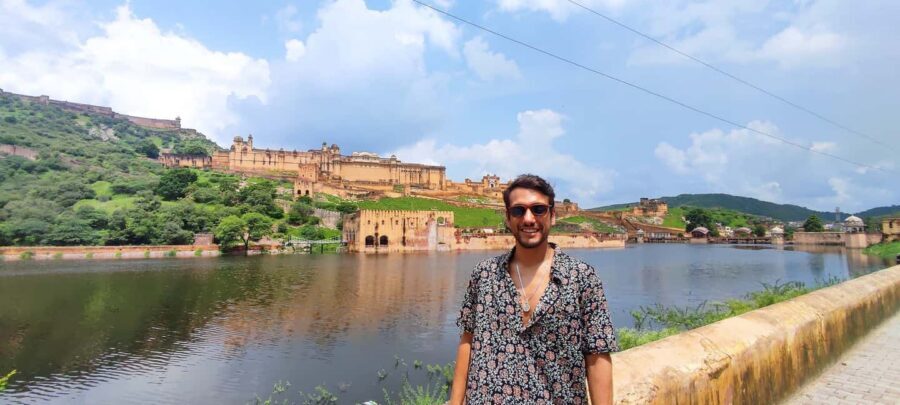
Next up is Amber Fort, where you’ll get to appreciate the blend of Hindu and Mughal architecture. This is the kind of place where details reward attention: gates, courtyards, and decorative elements reflect different influences in one setting.
If you like architecture, this is one of your best moments of the trip. If you’re mainly into photo landmarks, it’s still worth it because the fort complex feels more layered than a single façade.
Jal Mahal at Lake Man Sagar: the “out of the way” pause
You’ll see Jal Mahal (Water Palace) set in the middle of Lake Man Sagar. It’s not a long “tour of rooms” kind of stop in your day plan; it’s a scenic moment. That makes it valuable because it breaks up the heavier fort and palace sequence with something calmer and different.
Gatore Ki Chhatriyan: serene royal cenotaphs
Then comes Gatore Ki Chhatriyan, the royal cenotaphs. This stop is quieter and reflective compared to the big-ticket monuments. It’s also a nice reminder that Jaipur isn’t only about glamour; it’s also about memorial spaces and royal legacy.
Hawa Mahal: the Palace of Winds as an image-maker
You’ll continue to the iconic Hawa Mahal (Palace of Winds). This is the famous façade most people associate with Jaipur, and seeing it in person helps you understand why it became such a visual symbol. The design is made for looking at from specific angles, so timing and viewpoint matter.
Jantar Mantar: astronomy made visible
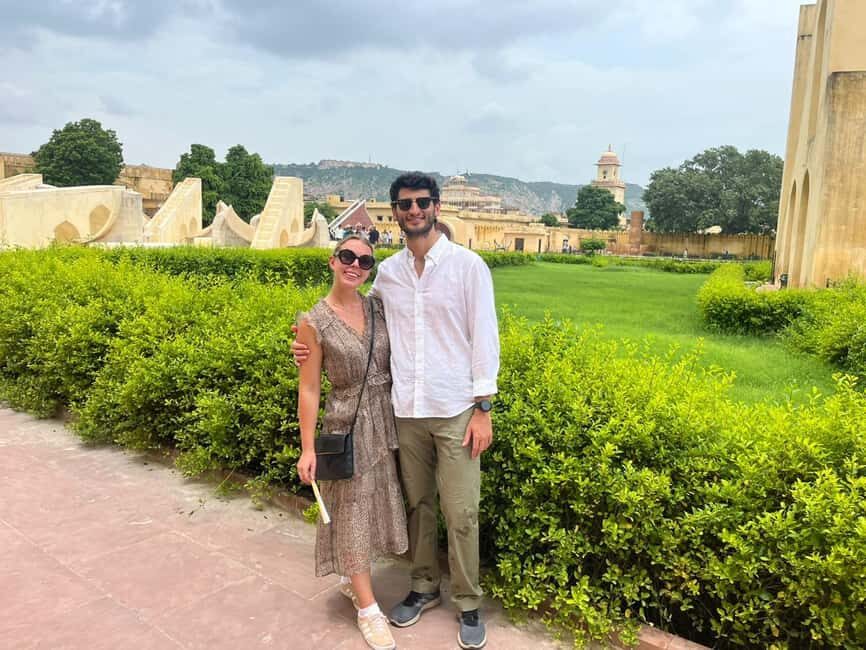
Next is Jantar Mantar Observatory, where time and measurement were turned into stone instruments. If you like science-ish history, this is a fun contrast to palaces and fort walls. It’s also a reminder that rulers weren’t only building for comfort; they were building for knowledge and prediction.
City Palace: the royal family’s home base
Finally, you’ll visit City Palace, home to Jaipur’s royal family. It’s both a working landmark and a cultural anchor. You’ll likely appreciate it most if you’ve already built context from the earlier stops, because City Palace feels like the center where everything connects.
Lunch, then back to Delhi by around 9 pm
You’ll break for lunch at a local restaurant, then drive back to Delhi. The plan returns you at about 9 pm. If you want to arrive earlier, let the operator know so they can adjust the timing.
Private driver and multilingual guides: why the experience feels smooth
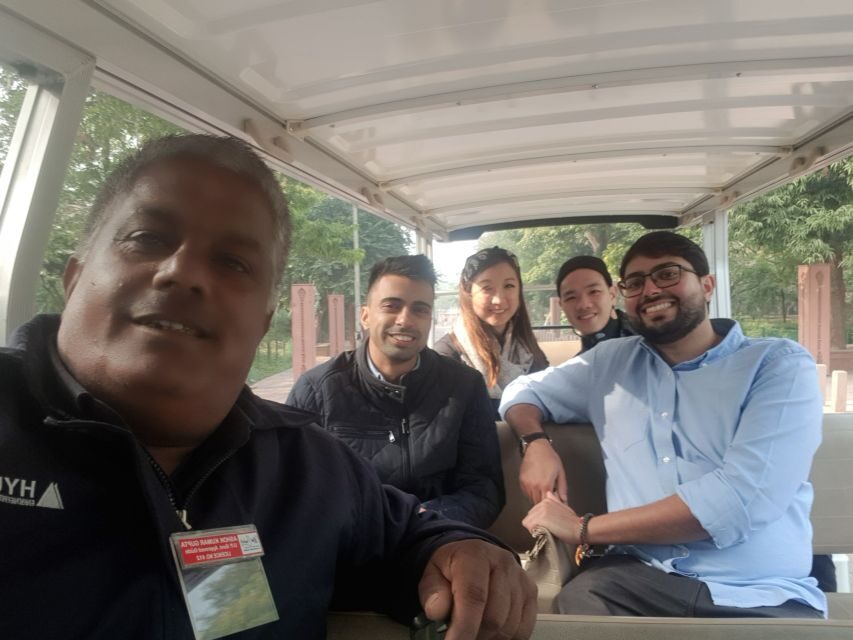
This is a private group tour, and that matters. With a shared public tour, you spend energy waiting for strangers. Here, your day is shaped around your route, your timing, and your guide’s flow.
In the feedback tied to this route, the driver experience is repeatedly praised. Names like Surinder, Monu, Narender, and Nek show up in accounts for safe, attentive driving. Even if you don’t get the same person, the pattern is clear: a good driver makes the difference on a trip where road time eats up a lot of the day.
Guides also matter because the schedule includes high-impact stops that you can easily misunderstand if someone doesn’t put them into context. This tour offers live guides in Spanish, English, French, German, or Russian. That flexibility is especially valuable if you want explanations to land clearly instead of relying on quick translations or guesswork.
Another practical quality-control point: bottled water is provided during transfers and sightseeing. It sounds small, but on a two-day sprint, you’ll feel grateful.
Price and value: is $140 per person worth it?
At $140 per person for 2 days, the value question boils down to what’s included for you.
This tour is built around:
- private guided visits,
- a comfortable private vehicle with a professional driver,
- hotel stays in a 4-star or 5-star category,
- bottled water,
- and help with entrance fees.
If you choose a package option that bundles tickets and accommodation together (some booking options do), the overall value usually improves because you’re less likely to face surprise costs later.
Where the pricing really makes sense is for travelers who want the “classic” Golden Triangle in a short time window without the planning tax. If you’re traveling solo, you may pay a bit more per person than you would in a group. If you’re two people or a small family, the private vehicle cost spreads nicely and you get a calmer, more controlled experience.
The potential drawback is also tied to price: because it’s private luxury, you’re paying for speed and convenience. If you want a slower pace or deeper time in fewer places, you’ll likely prefer a longer itinerary.
What to know before you go (so your mornings don’t fall apart)
A few details can make or break your day.
- Bring your passport. A current valid passport is required on travel day.
- Sunrise timing changes everything. If you choose 2:30 am pickup, you’ll be visiting the Taj Mahal at sunrise, which means an early start and a packed day.
- Hotel rooms are generally twin-sharing by default. If your party is 3 people and you want 2 rooms, there may be an additional charge.
- You’ll be back in Delhi around 9 pm on Day 2, unless you request an earlier arrival.
- Your guide helps with entrance fees, and bottled water is provided during transfers and sightseeing.
If you’re the kind of traveler who hates feeling rushed, consider skipping the sunrise option and going later that day. But if you want the best lighting and mood at the Taj, sunrise is the whole point.
Who this tour suits best
This is a strong match for:
- first-time Golden Triangle visitors who want the highlights fast,
- travelers who prefer a guide and a driver over self-planning,
- couples and small groups who value comfort during long road days,
- anyone who wants a clear plan from Delhi with hotel included.
It may be less ideal if:
- you dislike early mornings or long drives,
- you want lots of downtime between cities,
- you plan to spend hours and hours at only one monument.
Should you book this 2-day luxury Golden Triangle tour?
I’d book it if you’re time-limited and you want a smooth, guided “greatest hits” run with a hotel and private transport lined up for you. The sunrise Taj option is a real reason to choose this tour, and the guide support around entrance fees helps keep your schedule from getting swallowed by waiting.
I’d think twice if you’re sensitive to tight timing. With a 2-day loop, Jaipur Day 2 is packed, and the driving time is part of the deal. If that sounds exhausting, look for a longer itinerary or a slower plan in fewer cities.
FAQ
FAQ
What’s the pickup like for this Delhi to Golden Triangle tour?
Pickup is included from your hotel, airport, railway station, or any preferred location in Delhi, Noida, or Gurugram.
Can I visit the Taj Mahal at sunrise?
Yes. If you select a 2:30 am pickup time, the plan is to visit the Taj Mahal during sunrise.
What languages are available for the live tour guide?
The live guide is available in Spanish, English, French, German, and Russian.
How are hotel choices handled?
You can select a 4-star option (such as The Fern Residency or similar) or a 5-star option (such as InterContinental, Hilton, or similar).
Are the monument entrance fees handled during the tour?
Your guide helps you buy entrance fees at the monuments, so you won’t need to deal with the lines on your own.
What time will I be back in Delhi on the second day?
On Day 2 you’ll be back in Delhi around 9 pm. If you want to arrive earlier, you can request a change.