REVIEW · AGRA
Private Tour Guide For Taj Mahal
Book on Viator →Operated by Tour Guide Agra · Bookable on Viator
The Taj Mahal feels different at daybreak.
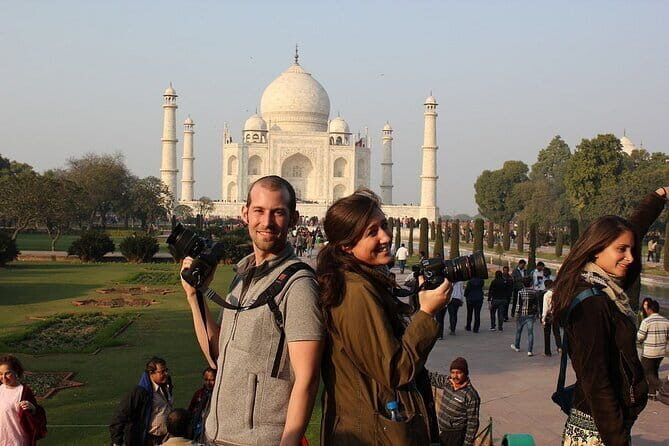
What makes this tour work so well is the private, English-speaking guide who helps you pace the visit and point you to strong photography timing before the heat and crowds take over. It’s also built for a relaxed, practical day: pickup is included, and you’ll get mobile-ticket style entry for the main monuments.
I especially like two things. First, the guide experience is not just generic facts; it includes photo-point advice and focused storytelling about what you’re actually seeing at the Taj. Second, you get mobile ticket handling and a soft-copy approach that helps you avoid extra hassle at the gates.
One thing to keep in mind: Taj Mahal admission is not included (₹1,300 per person), so plan for that extra cost. Also, photography rules can affect certain wedding-dress pre-wedding shoots near the Taj area, so it’s worth knowing the limits before you arrive.
In This Review
- Key highlights worth planning around
- A private guide changes how fast you get your bearings
- Pricing that makes sense once you separate the guide from the ticket
- Taj Mahal timing: how early morning improves your day
- Entering the Taj: mobile ticket, soft copy, and key rules
- What your guide will point out at the Taj Mahal
- Agra Fort: the Mughal power shift you can actually walk through
- How the tour pacing fits a 4–5 hour day
- The best-fit traveler for this private Taj and Fort plan
- Why this experience feels “worth it” once you’re inside
- Should you book this Taj Mahal and Agra Fort private tour?
- FAQ
- What sites are included in this private tour?
- How long should I plan for the experience?
- Is the Taj Mahal admission fee included?
- Are there tickets you can use on your phone?
- Do I get pickup?
- What kind of guide do I get?
- Is the tour only for my group?
- Is there a dress code I must follow?
- Are wedding dress pre-wedding photos allowed?
- Can I cancel and get a full refund?
Key highlights worth planning around

- Early-morning strategy for comfort: the tour strongly favors starting early so you can enjoy the Taj before the worst June heat.
- Photography guidance that saves time: your guide will advise the best photo angles and where to stand for better light.
- Mobile and soft-copy entry: you only need the ticket in digital form for entry into Taj Mahal and Agra Fort.
- Real monument context, not just dates: the guide shares specific background, including the Mumtaz Mahal story tied to Burhanpur.
- Agra Fort with a clear entry reality: there are multiple gates in theory, but only one is active for tourists right now.
A private guide changes how fast you get your bearings
Agra can feel like one long line of must-sees. With a private setup, you don’t waste the first hour figuring out where to stand, what to look at first, or how to avoid repeating the same “main view” from every angle.
I like that this tour is built around an English-speaking government certified and licensed guide. You still control the pace, but you’re not stuck with a loud group schedule. This is the kind of day where you can ask questions in the moment—why a certain layout was chosen, what to notice in the marble work, or how the fort’s role shifted over time.
The tour also promises pickup, which matters more than people think. Agra is busy, and a smooth start helps you show up at the Taj when conditions are actually favorable for sightseeing and photos.
Other Taj Mahal tours we've reviewed in Agra



Pricing that makes sense once you separate the guide from the ticket
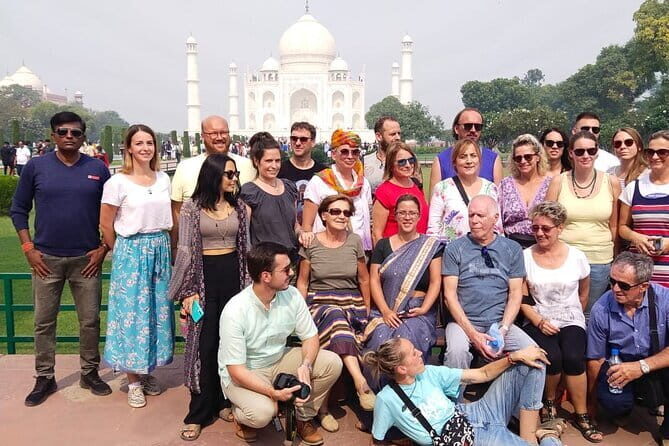
The headline price is $12 per person, but the key value is what you’re paying for: a private guide for the Taj Mahal portion (and guided time at Agra Fort as part of the overall experience). The monument entry fee is separate.
Here’s the practical way to think about it:
- You pay the guide fee ($12 per person).
- You still need to pay the Taj Mahal admission fee separately: ₹1,300 per person.
- Agra Fort admission is also mentioned as part of the entry with your soft-copy ticket approach, so it’s likely you’ll handle required fees at the time of entry.
So you’re not buying a “cheap ticket included” bundle. You’re buying someone to help you get more from the hours you’ll spend inside. For many people, that trade is worth it—especially at the Taj, where timing and what you focus on can change your whole experience.
Taj Mahal timing: how early morning improves your day

The Taj Mahal has a mood shift depending on the hour, and in summer it’s even more dramatic. In June especially, when temperatures climb fast, the tour recommendation is simple: go early.
Starting early helps you in two ways:
- Comfort: less time fighting the scorching sun.
- Photography: earlier light usually makes details look sharper and helps you avoid harsh glare.
That said, early morning isn’t only for photos. If you’d rather enjoy the place slowly—reading details, noticing symmetry, and letting the architecture sink in—this is still the best window for most visitors.
Your guide will also help you decide how much time to spend at each viewpoint. The Taj can easily swallow your time, and without a plan you might end up rushing through the exact parts you most wanted to see.
Entering the Taj: mobile ticket, soft copy, and key rules
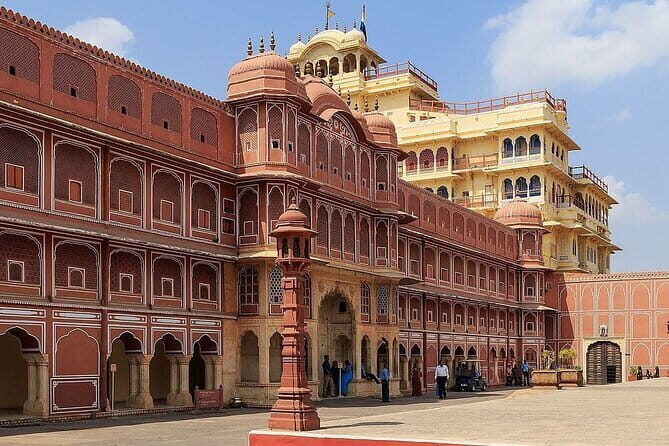
You’ll enter using a mobile ticket, and a soft copy is sufficient for entry into Taj Mahal and Agra Fort. That’s great if you’re traveling light or juggling phones, batteries, and chargers. Just make sure your ticket is accessible when you arrive.
There’s also some guidance you should take seriously around dress and photography:
- There is no mandatory dress code, but you are expected to maintain dressing decorum. The reason is practical: there is an adjoining mosque where local inhabitants offer prayers.
- Couples wearing wedding dress for pre-wedding photo shots are not allowed for photography unless they have written permission from the ASI office.
I’d treat those rules like you would temple etiquette anywhere in India: not as a suggestion, but as something staff will enforce. If your plan involves formal wedding outfits or a photo shoot, handle the paperwork first. If not, dress respectfully and focus on personal photos rather than staged sessions that may get stopped.
What your guide will point out at the Taj Mahal

The Taj Mahal story is famous, but the best guides help you see it in context. This one shares a detailed backstory that goes beyond the usual “built for a wife.”
You’ll hear that Shah Jahan constructed the Taj Mahal in memory of his wife Mumtaz Mahal. Then the guide connects the wider Mughal backdrop to explain that Mumtaz Mahal’s original tomb is in Burhanpur district in Madhya Pradesh—about 493 miles away from Agra. The tour also includes the detail that Mumtaz died in 1631 while giving birth to her 14th child, a daughter named GauharAra Begum.
What I like about this kind of explanation is that it changes how you look at the monument. You stop treating it like a pretty object and start seeing it as an outcome of real events, court politics, and a life story that shaped the building.
Your guide also advises best photography points. That’s not a small thing at the Taj. When you know where to stand and where not to block someone else’s line of sight, you spend less time stepping around strangers and more time getting good shots.
Other private guided tours in Agra






Agra Fort: the Mughal power shift you can actually walk through
Agra Fort is about 2.5 km from the Taj Mahal, so the day naturally connects the two worlds: love monument, then military and political center.
The tour frames Agra Fort in a clear arc. It was primarily built as a military establishment for the Mughal army by Akbar, when he declared Agra as the capital of the Mughal empire. Later, parts of the fort were improvised into a royal residence.
This is the part of the day that helps your brain reset. At the Taj, everything feels controlled and symbolic. At the fort, you start seeing how the empire functioned—defense, authority, and later comfort for royalty.
The fort was designated a UNESCO World Heritage site in 1983 when a UNESCO team visited and inducted it into the global list. The guide also covers practical entry details: there are four gates for accessing the fort, but right now only one active gate is used for tourist entry.
That one-gate reality matters because it shapes your walking route. If you assume you can approach from any side, you might waste time. With a guide, you’ll head where the active entry actually is and keep moving.
How the tour pacing fits a 4–5 hour day

The total time runs about 4 to 5 hours. In practice, it’s structured like a long Taj Mahal focus (around 3 hours) followed by a tighter Agra Fort visit (around 1 hour 30 minutes).
This pacing is a good match for first-time visitors. You get real time at the Taj rather than just taking the one iconic photo and sprinting out. Then you still get Agra Fort as the supporting act—enough to feel what kind of place it is, without turning the day into an all-day endurance test.
If you’re the type who likes to ask questions, the private format makes that easier. If you’re more “show me quickly,” you can still benefit from the guide’s plan while keeping a faster pace.
Also, because the Taj has time-of-day effects, starting on the early side can help you avoid that late-morning slump where your energy drops and your photos turn into squinting exercises.
The best-fit traveler for this private Taj and Fort plan

This tour suits you if:
- You want an English-speaking government certified licensed guide rather than a rush-through audio approach.
- You care about photos and want help finding photo angles and better timing.
- You prefer a private group experience where you can set a pace that feels human.
It’s also a good option if you’re traveling with adult family members who would enjoy historical explanation but don’t want to be shoved into a large group schedule.
On the other hand, you might feel limited if you’re expecting an air-conditioned vehicle included. The tour notes that an air-conditioned vehicle is not included, so your transport setup will depend on what’s arranged at pickup.
Why this experience feels “worth it” once you’re inside
A lot of Taj visits end up being a highlight reel of the same views. The advantage here is the combination of:
- timing that helps your eyes and your body,
- rules that keep you from getting stopped mid-plans,
- and a guide who ties what you see to the story behind it.
Names you’ll likely hear in this service include Mr. Tushar Sharma (and in some cases Mr. Tushar Dutt Sharma). Past clients associate him with handling monument entry tickets and giving detailed explanations in a way that feels patient rather than rushed. One person also noted that the guide brought a fun, lively tone without losing accuracy, which is a rare balance on tours.
There are also examples of coordination with drivers, like Satyavir and Naval, in separate arrangements. Even if your transport setup differs, the point is consistent: the whole day works better when someone helps coordinate the pieces so you’re not stressed while you’re trying to enjoy the Taj.
Should you book this Taj Mahal and Agra Fort private tour?
I’d book it if you’re going to Agra specifically for the big monuments and you want your time to feel organized and respectful. Early timing, photography help, and a licensed English guide can turn a “I saw it” day into a “now I understand it” day.
I wouldn’t book it if you want a fully bundled package where admission and transport are both included in the price. You’ll still need to plan for Taj Mahal admission (₹1,300 per person) separately, and the vehicle is not described as air-conditioned.
If your priority is smart use of a half-day and you’d rather enjoy the monuments than troubleshoot logistics on your own, this is a strong match.
FAQ
What sites are included in this private tour?
The tour covers the Taj Mahal and Agra Fort in Agra.
How long should I plan for the experience?
Plan for about 4 to 5 hours total (roughly 3 hours for the Taj Mahal and about 1 hour 30 minutes for Agra Fort).
Is the Taj Mahal admission fee included?
No. The Taj Mahal admission fee is listed as ₹1,300 per person and is not included.
Are there tickets you can use on your phone?
Yes. The tour includes a mobile ticket, and a soft copy ticket is sufficient for entry into Taj Mahal and Agra Fort.
Do I get pickup?
Pickup is offered.
What kind of guide do I get?
You’ll have an English-speaking government certified and licensed tour guide for private sightseeing of the Taj Mahal.
Is the tour only for my group?
Yes. It’s a private tour/activity, so only your group will participate.
Is there a dress code I must follow?
There is no mandatory dress code, but you must maintain dressing decorum because an adjoining mosque is used for prayers.
Are wedding dress pre-wedding photos allowed?
Couples wearing wedding dress for pre-wedding photo shots are not allowed for photography unless they have written permission from the ASI office.
Can I cancel and get a full refund?
Yes. Free cancellation is available, and you can cancel up to 24 hours in advance for a full refund.
If you tell me your travel month (especially whether it’s June) and whether you want Taj photos in the first 60 minutes or more of a slow stroll, I can suggest the best way to structure your time inside.