REVIEW · AGRA
Full-Day City Tour of Agra visit The Taj Mahal, Agra Fort & Fatehpur Sikri
Book on Viator →Operated by Hire Taxi India · Bookable on Viator
Agra in one day is surprisingly doable. This full-day highlights trip strings together three UNESCO sites, with the Taj Mahal and Agra Fort as your anchor stops, plus Fatehpur Sikri to complete the Mughal story. I like the time-saving golf cart transport inside major sites and the included buffet lunch with water bottles. One key consideration: the Taj Mahal is closed on Fridays, so plan around that.
You also get a private, air-conditioned vehicle and a professional guide, so you’re not figuring out routes or ticket timing on your own. I really like how the day is built around the same theme—Mughal power under Akbar—so the architecture makes more sense as you move through the stops. The other watch-out is the shopping time at the end; it’s built in, and you’ll want to enjoy it or at least set expectations.
Expect a long day with a clear rhythm: a morning start at 8am, the Taj Mahal first, then Agra Fort, then Fatehpur Sikri after lunch, and back to your hotel or Agra Cantt Railway Station around 6pm. You’ll want smart casual clothes, and there’s a vegetarian option for lunch if you request it when booking. A mobile ticket helps keep things simple, but traffic can stretch the in-between travel slightly.
In This Review
- Key things you’ll enjoy about this Agra highlights tour
- Taj Mahal by golf cart, with the day’s best photo momentum
- Agra Fort and Akbar: red sandstone, mosques, and courtyards
- Fatehpur Sikri’s “ghost town” feeling, plus more golf carts
- Lunch, timing, and how to handle a long Mughal day
- Shopping in Agra: marble, zari embroidery, leather, brass, and carpets
- Price and value: what $96 buys you in Agra
- Who this private tour is best for
- Should you book this Full-Day Agra highlights tour?
- FAQ
- What time is the pickup for this Agra tour?
- Where does the tour start and where do you end up?
- How long does the tour take?
- Which monuments are included in the tour?
- Is the Taj Mahal open every day?
- What’s included in the price?
- Are golf cart rides included?
- What is the cancellation policy?
Key things you’ll enjoy about this Agra highlights tour
- UNESCO trio with one coherent story: Taj Mahal, Agra Fort, then Fatehpur Sikri
- Golf cart rides inside the biggest sites to save walking time and speed up your visit
- Private AC transport plus pickup from your hotel or Agra Cantt for less hassle early on
- Akbar-focused explanations connecting the fort and the later “ghost town” at Fatehpur Sikri
- Built-in lunch and water bottles so you can stay moving without hunting for food
- Time for real handicraft shopping in Agra including marble/soft stone inlay and embroidery
Taj Mahal by golf cart, with the day’s best photo momentum
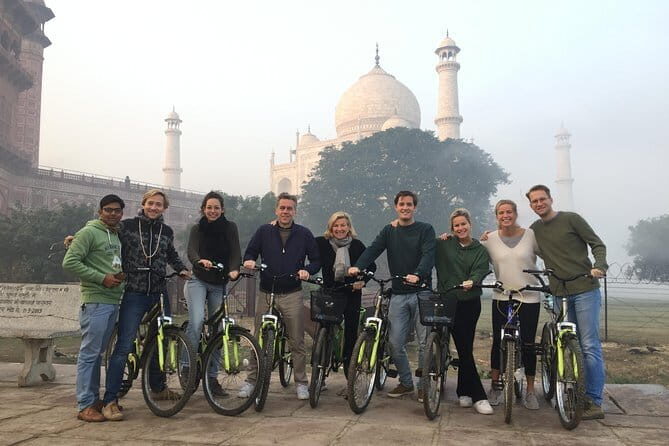
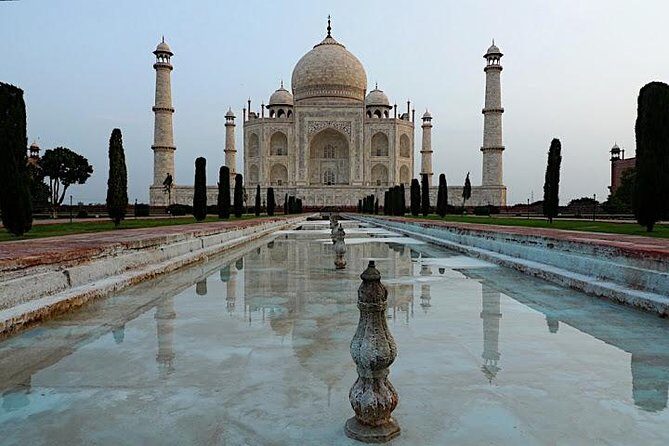
Your morning starts with pickup around 8am from your Agra hotel or Agra Cantt Railway Station, then you’re on a private air-conditioned Toyota with a guide. The tour keeps the first big-ticket moment efficient, with golf cart shuttles helping you move around the expansive Taj Mahal grounds faster.
Plan for the Taj Mahal visit to feel like two things at once: an emotional landmark and a design lesson. The marble complex, the symmetry, and the sheer scale can hit you hard even if you’ve seen pictures before. With a guide steering you, you also spend less time guessing where to look and more time noticing how the design works up close.
A practical tip for making the Taj Mahal experience feel worth the effort: arrive ready to walk, but don’t burn your energy on long transfers. The golf cart setup is the point here—it helps you save time and still see key viewpoints without turning the day into a marathon. Also, if you’re shooting photos, early clarity matters. You’ll get a solid window for photos before the day’s heat and crowds shift the vibe.
The one big calendar issue is simple: the Taj Mahal is closed on Fridays. If your travel dates land on a Friday, you’ll need a different plan, because this schedule depends on that first stop.
Other Taj Mahal tours we've reviewed in Agra



Agra Fort and Akbar: red sandstone, mosques, and courtyards
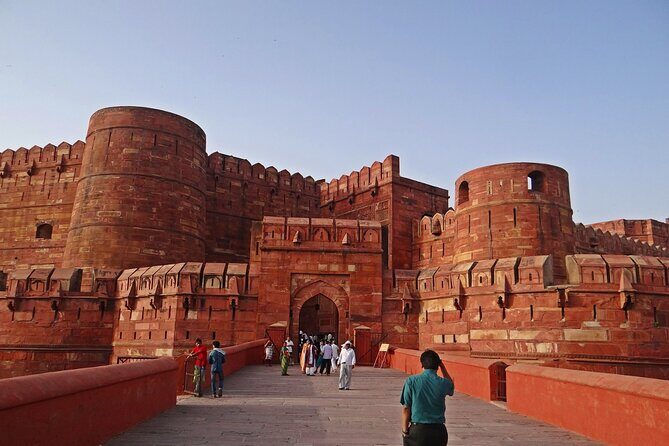
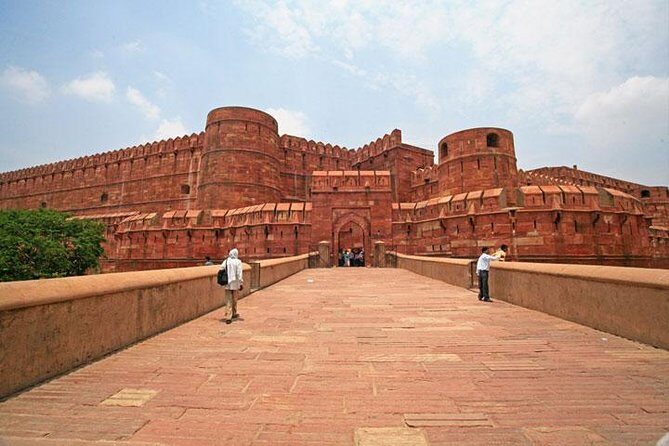
After the Taj Mahal, the tour moves to Agra Fort, another UNESCO World Heritage site built of red sandstone and tied to Emperor Akbar. The fort dates to the 16th century, and you’ll spend about an hour here, which is enough for a focused visit if you’re not trying to read every inscription on every wall.
What I like about the Agra Fort stop is the way it broadens your understanding beyond a single monument. You’re not just looking at one famous building; you’re stepping into a defensive structure filled with smaller spaces—mosques, courtyards, and intricate areas that show how the Mughal court organized both power and daily life.
The architecture blend is a major highlight worth paying attention to. You’ll hear how the fort reflects a synthesis of Central Asian and Hindu architectural influences, which helps explain why Mughal design can feel both formal and surprisingly layered. Even in an hour, if your guide keeps the story tight, you’ll come away with a clearer picture of how culture and politics shaped building styles.
A drawback to keep in mind: Agra Fort is not the kind of site where you can slow down and wander endlessly. If you prefer a slow, unstructured walk, this hour can feel a bit scheduled. Still, for most people, it’s the right tempo because you’re stacking three major UNESCO sites in one day.
Fatehpur Sikri’s “ghost town” feeling, plus more golf carts

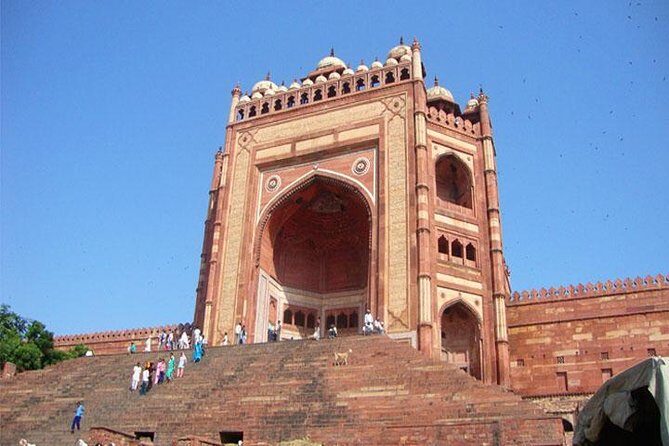
After lunch, you travel toward Fatehpur Sikri, another UNESCO site often described as a perfectly preserved ghost town. The tour includes a drive segment, and you’re scheduled to arrive in the afternoon with about three hours at the site, so you’re not only seeing it in a quick pass.
This is one of those places where the name makes sense. The scale of abandoned planning, the sense of a city that once functioned as the heart of a world, and the stillness all combine to create a different mood than the Taj Mahal. Fatehpur Sikri was built in the late 16th century by Akbar and later abandoned after a short period, so the site carries a built-and-left feeling that photos capture well.
Just like at the Taj Mahal, golf carts help you cover ground without exhausting yourself before the last stretch of the day. That matters here because Fatehpur Sikri is large, and the wrong pace can make it harder to notice details. If you want to experience the “ghost town” concept with your feet instead of only your eyes, the golf cart approach gives you enough energy to focus on what the guide points out.
If you tend to learn better through stories, this stop does that job well. The guide connects the site back to Akbar, so Fatehpur Sikri doesn’t feel random. It becomes the next chapter after Agra Fort, with a different purpose and a different ending.
Lunch, timing, and how to handle a long Mughal day
Between major stops, the tour includes a buffet-style lunch at a local restaurant. That’s a big value point because you don’t need to chase food while trying to keep up with your schedule. There’s also a vegetarian option available if you request it when booking, which makes it easier if your group has dietary needs.
The tour rhythm is built around keeping you moving: Taj Mahal first, then Agra Fort, then lunch, then Fatehpur Sikri, then shopping. This can feel intense, but it’s also why the day works for people who only have one day in Agra. You get the UNESCO highlights without giving up the entire daylight period to planning.
Dress smart casual, and keep your shoes comfortable. You’ll be on your feet in the monuments’ outdoor spaces, and the day’s success depends more on comfort than on stamina. Also, plan your water strategy around the fact that bottled water is included throughout the tour, which helps reduce one more thing you’d otherwise have to manage.
Shopping in Agra: marble, zari embroidery, leather, brass, and carpets
Once the monuments are done, the tour builds in a shopping stop in Agra, scheduled for early evening. You’ll have about an hour to browse and bargain, and you’ll be guided toward handicrafts tied to the Mughal-era taste for fine materials.
The kinds of items you can shop for include marble and soft stone inlay work, Zari-style embroidery, leatherwork, brass objects, jewelry, and carpets. This shopping time can be fun if you see it as a cultural match to the sites you just toured. The Taj Mahal is marble, Akbar-era architecture is stone, and Fatehpur Sikri’s whole existence is about court-scale craftsmanship. When shopping follows the monuments instead of happening randomly, it feels more grounded.
That said, I’d treat this as a built-in bonus, not the main event. If you hate shopping stops or you’re traveling with someone who gets impatient, set expectations before the day starts. Decide what you’ll do if you’re not interested in buying, and give yourself permission to browse quietly or skip deeper conversations.
One smart approach: if you do want to buy, focus on craftsmanship and finish rather than just the look of the product. Marble inlay and embroidery can vary a lot, and it’s easier to judge quality when you’re not rushing.
Other Agra Fort tours we've reviewed





Price and value: what $96 buys you in Agra
At $96 for a full-day tour, the value is strongest when you look at what’s included. You’re getting a private air-conditioned vehicle for transfers and sightseeing, a professional guide, monument entrance fees, a buffet lunch, and water bottles throughout the day.
For first-time visitors, the biggest hidden value is the “time tax” you avoid. Without a guided, scheduled format, you’d likely spend time figuring out entry logistics, backtracking across town, and negotiating transport between three separate UNESCO sites. This tour gives you the structure and keeps you from wasting prime daylight.
There are also a couple of costs you should mentally plan for. Drinks are not included, and gratuities are recommended. If you add drinks and tips, your total rises, but it still usually lands in a fair range for a private, full-day circuit that hits three major UNESCO stops.
Also note: the tour has a mobile ticket, which usually reduces last-minute confusion at entrances. And while the price is set, the operator also notes group discounts, which can help if you’re booking as part of a small group.
Who this private tour is best for
This private tour format is ideal if you want structure. If you only have one day in Agra, the UNESCO trio approach is the simplest way to cover the must-sees without turning your day into a series of separate adventures.
It’s also a great fit if you appreciate context. The guide’s focus on Akbar ties the sites together, so you’re not just collecting postcards. And the included golf cart rides make a difference for people who still want a full day but don’t want it to turn into sore feet and nonstop walking.
If you should skip it? Consider skipping or adjusting expectations if you strongly dislike shopping stops. You’ll get about an hour for crafts, including embroidery, leather, marble/soft stone inlay, brass items, jewelry, and carpets, and that time is part of the schedule.
It’s also not the right plan if you can only travel on a Friday. The Taj Mahal closure is central to this day’s flow, so that date constraint matters a lot.
Should you book this Full-Day Agra highlights tour?
Book it if you want a one-day plan that hits three UNESCO sites with an AC vehicle, a guide, entrance fees, lunch, and even golf cart rides to cut down the worst walking. The pacing is designed to keep the day productive, and the Akbar-centered storytelling helps the monuments feel connected rather than random.
Don’t book it if you’re set on Friday travel, because the Taj Mahal is closed then. Also pause if you know you’ll feel irritated by a craft-shopping hour. In every other case, this is a sensible, efficient way to see Agra’s Mughal highlights without the planning stress.
FAQ
What time is the pickup for this Agra tour?
The tour starts with an 8:00 am pickup from your hotel in Agra or from Agra Cantt Railway Station.
Where does the tour start and where do you end up?
It starts in Agra, Uttar Pradesh, and ends back at the meeting point. In practice, you’ll be transferred back to either Agra Cantt Railway Station or your hotel around 6pm.
How long does the tour take?
The duration is approximately 9 hours.
Which monuments are included in the tour?
You visit the Taj Mahal, Agra Fort, and Fatehpur Sikri.
Is the Taj Mahal open every day?
No. The Taj Mahal is closed on Fridays, and this tour includes it as the first stop.
What’s included in the price?
The tour includes all transfers and sightseeing in an air-conditioned private vehicle, a professional private guide, monument entrance fees, a buffet lunch, and water bottles during the tour.
Are golf cart rides included?
Yes. Golf cart rides are included at the Taj Mahal and at Fatehpur Sikri.
What is the cancellation policy?
You can cancel for free up to 24 hours in advance of the experience start time for a full refund. If you cancel less than 24 hours before, the amount paid is not refundable.