REVIEW · AGRA
Agra Shopping Tour with Guide
Book on Viator →Operated by Muhammad Shujat Ali · Bookable on Viator
Agra’s crafts are way more fun than souvenirs. This handicrafts shopping tour puts you close to the making of zardozi embroidery and pietra dura marble inlay, so you’re not just buying a product—you’re seeing how it’s made. You also get a guide to help you spot decent work and avoid the usual shopping headaches.
I love that the focus stays on authentic workshops—including government-approved emporiums and family-run studios—where artisans actually create pieces using Mughal-era techniques. I also like that the tour is practical: you’ll get bargaining tips and help with shipping so the purchases don’t turn into a hassle later.
One thing to keep in mind: this is a shopping tour, so you’ll spend time browsing and deciding. If you prefer sightseeing-only stops with no sales pressure at all, you might find the shop visits a bit more intense than you want.
In This Review
- Key Highlights You’ll Actually Care About
- How This Agra Handicrafts Tour Works (In Plain English)
- Zardozi vs. Pietra Dura: What You’re Really Buying
- Zardozi embroidery (the “thread-on-fabric” craft)
- Pietra dura (the “stone-in-marble” craft)
- Your Guide and the Shopping Mindset (Muhammad Shujat Ali)
- Government-Approved Emporiums: Where You Get Baselines
- Family-Run Studios: Where the Craft Feels Human
- Inside the Zardozi Workshop: Gold/Silver Threads Up Close
- Pietra Dura Marble Inlay: Semi-Precious Stones, Real Precision
- How the Bargaining Tips Really Help
- Shipping Assistance: Protect Your Purchase (and Your Weekend Plans)
- What the 3-Hour Time Window Means for Your Agra Day
- Price and Value: Why $10 Can Be a Smart Deal
- Who This Tour Fits Best (and Who Might Skip It)
- Should You Book the Agra Handicrafts Tour with Muhammad Shujat Ali?
- FAQ
- FAQ
- What is the duration of the Agra shopping tour?
- Is pickup included?
- What crafts will the tour focus on?
- Does it include visits to emporiums or studios?
- How much does the tour cost?
- Who is the tour guide?
- Is there free cancellation?
Key Highlights You’ll Actually Care About

- Zardozi embroidery demos showing gold/silver thread work for sarees, clutches, and wall pieces
- Pietra dura marble inlay craftsmanship, including stone embedding for Taj Mahal-inspired decor
- Government-approved emporiums plus family-run studios for a mix of reliability and local style
- Bargaining guidance and shipping assistance so you can buy with less stress
- Private tour format, meaning it’s just your group instead of a big crowd
How This Agra Handicrafts Tour Works (In Plain English)
This tour is built around two things Agra does especially well: zardozi and pietra dura. In other words, you’ll be shopping in the middle of the craft process, not wandering through random stalls hoping for the best.
You’ll start with pickup offered (so getting there is easier), and you’ll carry a mobile ticket. The tour runs about 3 hours, which is long enough to visit multiple craft stops and still short enough to fit neatly into your day in Agra.
And yes, the guide matters here. The experience is led by Muhammad Shujat Ali, and one of the strongest themes in the feedback is that he doesn’t just point at items—he also warns you about what to watch for. That’s the difference between a shopping trip and a smart shopping plan.
Other shopping tours in Agra

Zardozi vs. Pietra Dura: What You’re Really Buying

Before you step into any shop, it helps to know what you’re looking at. This tour’s big draw is that you get to connect the final product to the craft behind it.
Zardozi embroidery (the “thread-on-fabric” craft)
Zardozi is the technique where artisans hand-stitch gold/silver threads onto fabric. On this kind of work, the quality often shows up in details: how even the stitching is, how neatly threads sit on the surface, and how consistent the pattern edges look.
This is ideal if you’re shopping for something wearable like a saree, or something smaller but still showy, like a clutch. It can also work well for decor such as wall hangings—pieces that look dramatic even in a plain room.
Pietra dura (the “stone-in-marble” craft)
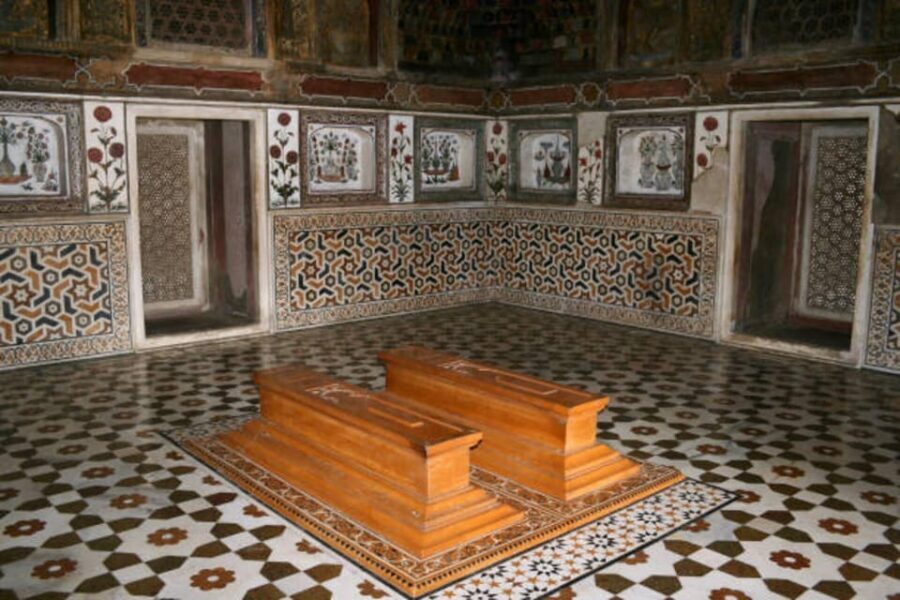
Pietra dura is marble inlay—think semi-precious stones embedded into a design. The tour focuses on work inspired by the Taj Mahal look, with examples like tabletops, jewelry boxes, and decorative items.
Here, quality is often about precision. You want clean stone edges, good alignment in the design, and a finish that looks intentional rather than rushed.
If you go in knowing which craft you’re interested in, you’ll shop faster and feel more confident. That’s where having a guide helps a lot.
Your Guide and the Shopping Mindset (Muhammad Shujat Ali)

Having the right guide is a quiet superpower on a handicrafts tour. With Muhammad Shujat Ali, the tone is practical. He’s described as knowledgeable and nice, but more importantly: he helps you be cautious about what you’re told and what you’re shown.
That matters because shopping in any tourist market comes with incentives. Some sellers exaggerate. Some misunderstandings happen. A good guide keeps you focused on what’s reasonable and what’s a red flag.
Also, this is a private tour/activity. That’s not a small detail. It means the pace can fit your group, and questions don’t get lost while you’re waiting for a crowded guide to finish talking.
Other guided tours in Agra





Government-Approved Emporiums: Where You Get Baselines

A big part of this tour is stopping at government-approved emporiums along with family-run studios. That combination is smart.
Government-approved spaces can give you a starting point:
- You usually have more consistency in how products are presented.
- You can compare items more easily because the rules feel more structured.
- It’s often a safer bet for genuine pieces versus random imitation.
That said, these places can sometimes feel more “retail” than “workshop.” You may not see every step of production. Still, they’re useful for setting a baseline price and quality level before you get into the more personal studio environment.
Family-Run Studios: Where the Craft Feels Human
After the more official emporium stops, you’ll spend time in settings where craft is treated like a skill passed down through generations. The tour highlights artisans producing designs tied to Mughal-era traditions.
This part of the experience is about seeing the human side of the work:
- You can ask questions while the craft is fresh in your mind.
- The atmosphere is often slower, and you get time to look closely.
- You’ll pick up practical clues about what goes into making the piece.
It’s also where your bargaining strategy gets easier. When you understand what the maker is doing—thread by thread, or stone by stone—pretending you know nothing is harder. And that confidence helps you avoid overpaying.
Inside the Zardozi Workshop: Gold/Silver Threads Up Close
One of the best parts of this tour is the chance to watch zardozi artisans work. You’ll see hand-stitching of gold/silver threads onto fabric, and the tour specifically calls out practical end uses like sarees, clutches, and wall hangings.
When you watch stitching up close, you start noticing what “good” means. You’ll likely see:
- how detailed patterns are built,
- how carefully thread is handled,
- how the design develops as the work continues.
Why this matters for you: once you’ve seen the labor, you’ll judge quality less by how shiny something looks in a shop light. You’ll look more at neatness and consistency, and you’ll feel more in control during shopping.
Potential drawback: watching the process can create impulse buying. This is normal. Just give yourself a quick rule: if you like it, check it against your budget and timeline before you commit.
Pietra Dura Marble Inlay: Semi-Precious Stones, Real Precision
Then you shift to pietra dura—the marble inlay craft where semi-precious stones are embedded into designs. The tour frames it in Taj Mahal-inspired pieces such as jewelry boxes, decor, and tabletops.
This craft is slower to explain than zardozi, but once you see it, the logic is clear: the design depends on precision. Stones need to fit cleanly and stay aligned within the pattern.
For you, this is where careful shopping pays off. Marble inlay pieces can look similar from a distance, but details can vary a lot:
- edge sharpness,
- stone color consistency,
- overall finish quality.
If you’re buying an item you’ll keep for years, pietra dura is a strong choice because the craft is visible and tactile. You’ll be able to tell, at least somewhat, whether the piece looks carefully made.
How the Bargaining Tips Really Help
Shopping in Agra is not just a transaction. It’s a conversation. This tour includes guidance with bargaining tips, and that can change how your whole experience feels.
The best practical approach is simple:
- Decide what craft you’re buying (zardozi vs. pietra dura).
- Compare within your budget before you get emotionally attached.
- Use the guide to sanity-check what you’re being told.
A guide who warns you about what to be cautious about helps you avoid common traps like overpaying for poor finishing or buying a piece that doesn’t match the quality you thought you were getting.
Also, if you’re buying multiple items, bargaining becomes part math and part patience. It’s easier when you’re not rushed and the tour is focused on shopping.
Shipping Assistance: Protect Your Purchase (and Your Weekend Plans)
A thoughtful feature of this tour is shipping assistance. If you’re coming from outside India—or just don’t want fragile items stuffed into your suitcase—this matters.
Marble inlay and decorated craft items can be surprisingly awkward to pack. Shipping support helps reduce stress and makes it more likely you’ll end up with pieces you can enjoy later, not just carry back in fear.
You still want to treat this like real life logistics:
- ask how fragile items will be handled,
- confirm what you’re buying,
- make sure you understand the plan for getting it safely to where you need it.
The tour doesn’t pretend shipping is magic. But having help is a big advantage.
What the 3-Hour Time Window Means for Your Agra Day
Three hours sounds short until you’re in a workshop where you want to look closely. This duration is a practical sweet spot.
You get enough time to:
- see the crafts,
- visit different types of sales points (government-approved and family-run),
- and still do your main Agra plans afterward.
If you have limited time in town, this is a helpful way to pack value into a small block. If you’re in Agra for a long stay and want to browse slowly on your own, you might skip this and shop independently. But for most people, a guided craft route makes the shopping part faster and more confident.
Price and Value: Why $10 Can Be a Smart Deal
At $10 per person, this tour is priced like a budget-friendly add-on—especially compared with the cost of buying craft items that could be mishandled or overpriced.
Here’s why the value can be real:
- You pay less than you’d likely spend on “just a guide” time.
- You get structured access to both emporiums and studios.
- You get bargaining tips plus shipping assistance.
Even if you only buy one item, the guidance can help you avoid a bad deal. And if you buy nothing, you still walk away with a clearer understanding of how zardozi and pietra dura are made—so future shopping won’t feel like guesswork.
Who This Tour Fits Best (and Who Might Skip It)
This tour is ideal if:
- you want souvenirs with a story you can explain,
- you’re interested in zardozi or pietra dura specifically,
- you want help with bargaining and shipping,
- you prefer a private setting where you can ask questions without rushing.
You might consider skipping or changing your plan if:
- you want only landmark sightseeing and hate shop time,
- you don’t plan to buy anything and dislike structured shopping routes,
- you prefer to choose crafts entirely on your own without guidance.
The tour works best as a shopping-and-craft education combo.
Should You Book the Agra Handicrafts Tour with Muhammad Shujat Ali?
If you’re the type of traveler who likes to buy meaningful items—and you want to reduce the stress of buying in a busy market—this tour is a strong yes. The key reasons are access to real craftwork, the combination of emporiums and family studios, and the fact that the guide helps you be cautious (not just persuasive).
Book it if you want a tight route, a short time commitment, and a better chance of getting fair value on what you choose—especially if you’re eyeing zardozi threadwork or pietra dura stone inlay.
FAQ
FAQ
What is the duration of the Agra shopping tour?
The tour lasts about 3 hours.
Is pickup included?
Yes, pickup is offered.
What crafts will the tour focus on?
The tour focuses on zardozi embroidery and pietra dura marble inlay work.
Does it include visits to emporiums or studios?
Yes. It includes visits to government-approved emporiums and family-run studios.
How much does the tour cost?
The price is $10.00 per person.
Who is the tour guide?
The experience provider is Muhammad Shujat Ali.
Is there free cancellation?
Yes. You can cancel for a full refund if you cancel up to 24 hours in advance.