REVIEW · AGRA
Agra Local Sightseeing with Sunrise or Sunset Experience
Book on GetYourGuide →Operated by India Tour Solution - ITS · Bookable on GetYourGuide
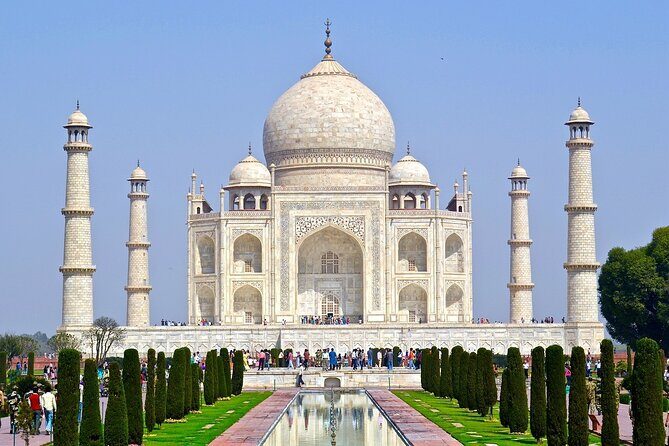
Sunrise in Agra changes the whole mood. This private Agra local sightseeing experience is built around your chosen start time, with skip-the-line Taj Mahal entry and a guide who helps you read the place instead of just posing in front of it. You also get a smooth pickup-and-drop setup so you’re not spending your morning negotiating.
What I like most is the focus on seeing the right details at the right times. The Taj Mahal visit is paired with an up-close demonstration of inlay work, and the itinerary moves efficiently from grand Mughal power (Agra Fort) to the smaller, exquisite artistry of the Baby Taj.
One thing to plan for: monument entrance fees and lunch aren’t included. Also, the Taj Mahal is closed on Friday, and cameras are not allowed—so you’ll want to think through what you’ll use for photos before you go.
Key highlights at a glance
- Skip-the-line entry to the Taj Mahal for a calmer start
- A professional guide who explains what you’re actually looking at
- Inlay work demonstration you can see up close
- Battery bus return included at the Taj Mahal and Fatehpur Sikri
- Mehtab Bagh gives you a second perspective across the Yamuna
- Fatehpur Sikri plus time for local handicraft shopping afterward
In This Review
- Sunrise or Sunset Taj Mahal: When the light does the talking
- Private pickup that actually respects your time
- Taj Mahal with skip-the-line entry and an inlay-work show
- Agra Fort: Mughal power, red sandstone drama
- Baby Taj and Mehtab Bagh: the second and third acts
- Fatehpur Sikri: a walled city day trip with batteries included
- Prices and value: what $15 covers and what to budget
- Guides and drivers: why names matter in a one-day tour
- Practical rules for Taj planning: shoes, IDs, and cameras
- Who this tour fits best
- Should you book this Agra sunrise or sunset tour?
- FAQ
- What’s the duration of the Agra local sightseeing tour?
- Where do you get picked up and dropped off?
- Which attractions are included in the itinerary?
- Are monument entrance fees included?
- Is lunch included?
- Are cameras allowed?
- What if I’m traveling on a Friday?
- What languages can the guide speak?
Sunrise or Sunset Taj Mahal: When the light does the talking

If you pick a sunrise or sunset slot, you’re doing more than avoiding crowds. You’re timing the Taj Mahal to the way its marble behaves in different light. Early and late, the marble can look softer and more alive, and your guide can point out details that are easy to miss under harsher midday brightness.
For photography, timing matters because you’ll be on foot in a lot of the same spots, just with different lighting. That’s where a guide earns their keep: they’ll help you understand what you’re seeing—symmetry, materials, and why the building looks white even though it isn’t simply plain marble. You’ll also spend the early part of your day anchored around the Taj Mahal’s layout, so the rest of your stops make more sense afterward.
You’ll also have a practical edge. Skip-the-line entrance means you’re less likely to waste your limited daylight sitting in queues while the sky changes behind you.
Private pickup that actually respects your time
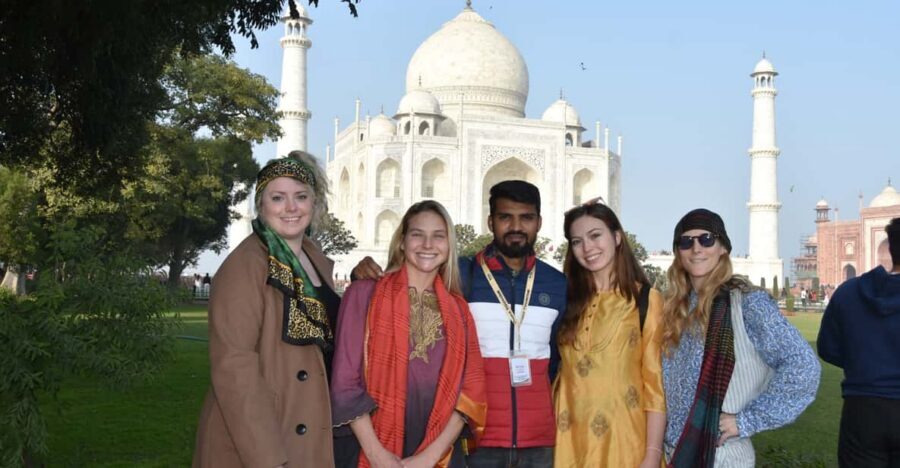
This tour runs as a private group, not a crowded bus shuffle. Your driver and guide meet you at one of three pickup options: the airport area, Agra, or Agra Cantt. Pick whichever is easiest for your arrival and you’ll save that morning headache.
You’ll travel by air-conditioned private vehicle. In Agra, that matters because the day can heat up fast, especially in the summer months. The route is designed to keep you moving between sites without you having to figure out logistics mid-trip.
On the back end, you get drop-off to Agra Cantt, Agra, or the airport area. That’s a small thing until you’re tired and sweaty and trying to find your way back. Here, the tour handles that part, which gives you energy for the sightseeing.
Group size is kept private, so you can ask questions without the classic mic-distance problem you get with larger groups.
Other Taj Mahal sunset tours in Agra


Taj Mahal with skip-the-line entry and an inlay-work show

The Taj Mahal visit is the anchor of this day. You’ll have about two hours on site, and the tour style is built around comprehension as much as spectacle.
Skip-the-line entry is a big deal here. Even if you’re not trying to win a photo contest, it keeps your experience smoother. Less waiting means more time to actually look at the building: the proportions, the calligraphy areas, the way light hits different marble surfaces, and the details around the main structure.
One of the standout parts is an up-close demonstration of inlay work. This is the sort of thing that’s hard to appreciate from a distance. When you see how these materials were set and how the pattern work flows, the Taj stops being only a famous silhouette. It becomes a technical accomplishment.
A heads-up that affects planning: cameras are listed as not allowed. That means you should leave your camera gear behind and also be ready to rely on what you’re permitted to use. If photography is a major goal, check your own comfort level with that rule before booking.
Also, Taj Mahal closures matter. The Taj Mahal is closed on Friday, so if your trip lands on a Friday, this option won’t work as advertised.
Agra Fort: Mughal power, red sandstone drama

After the Taj, you move to Agra Fort, a UNESCO site and a former Mughal residence. You’ll get about one hour here, which sounds short until you realize how quickly the fort’s scale can overwhelm you if you’re wandering without a plan.
Agra Fort’s main “wow” is the feel of power. The red sandstone and marble elements create a strong visual contrast, and the fort layout gives you a sense of how emperors lived and governed from within these walls. Your guide’s job is to connect what you see—corridors, ramparts, architectural choices—to the bigger story behind the place.
This stop also helps pace your day. After the Taj’s marble artistry, the fort feels more solid, more fortified, more practical. It’s the Mughal world as administration and authority, not romance and memorial.
Lunch isn’t included, so you’ll need to plan to eat on your own during the time window. If you hate hunting for food when you’re already tired, bring a simple snack strategy (and expect to use bottled water during the day; it’s included).
Baby Taj and Mehtab Bagh: the second and third acts
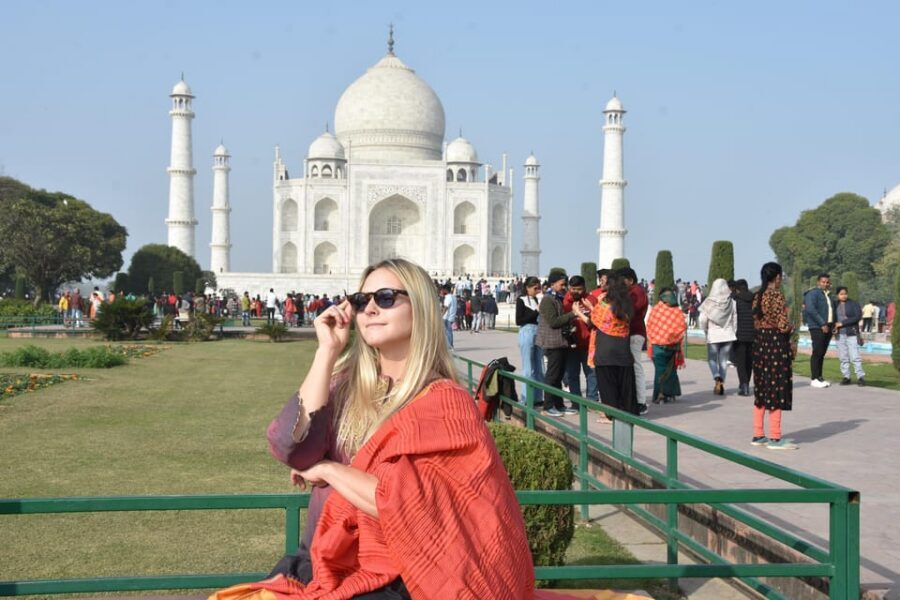
Then you switch gears to the Baby Taj, the Tomb of I’timād-ud-Daulah. You’ll have about 35 minutes, and the time is about the right length. This site is smaller than the Taj Mahal, but it’s packed with delicate details. If you like the idea of studying craftsmanship up close, the Baby Taj is where you’ll get that “wait, look at this” feeling—more jewelry box than monument.
After that, you head to Mehtab Bagh, the garden north of the Taj Mahal. It’s another short stop (about 35 minutes), but it’s timed for a different kind of viewing. Across the Yamuna River, you get a perspective that feels separate from the main Taj angles inside the complex. It’s the same icon, seen through a calmer, more open setting.
This pairing works well because it prevents your eyes from going numb. You see the Taj from the official focus points, then you see another scale and another viewpoint. That’s how the day turns into multiple experiences, not just one long monument visit.
Fatehpur Sikri: a walled city day trip with batteries included
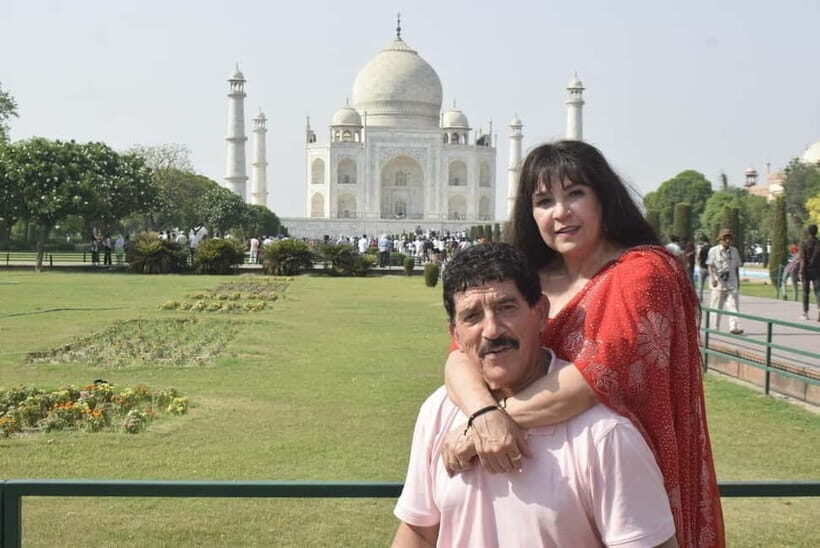
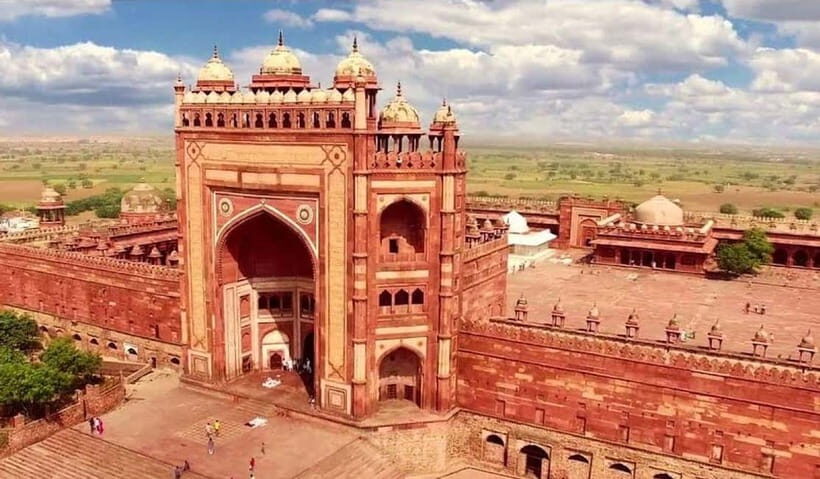
Next up is Fatehpur Sikri, a 16th-century walled city with a “how did they build all this” vibe. You’ll have about 70 minutes here, which is enough to walk through major sections and still have time to stop and absorb details instead of sprinting.
This is the stop that often surprises people. The Taj Mahal is expected. Fatehpur Sikri can feel like stepping into a different era of urban planning. You’ll see well-preserved buildings and hear the site connected to its intriguing history—your guide’s storytelling matters a lot here, because the walls are interesting, but the meaning is what makes it stick.
Transportation is handled smartly. There’s a battery bus return ride included at Fatehpur Sikri. So even if the site makes you walk more than you planned, you’re not stuck making the whole return journey on foot.
After sightseeing, you’ll have time for local shopping for handicrafts. This is a good moment to stretch your legs and pick up small souvenirs without turning the trip into a shopping mission.
Other Agra city and sightseeing tours






Prices and value: what $15 covers and what to budget
At around $15 per person, this tour can look like a steal—until you map what’s included. Entrance fees to monuments are not included, and lunch is not included. Bottled water is included, and the tour includes private guide time, private air-conditioned transport, and skip-the-line Taj Mahal entry.
So what are you really paying for?
- A guide who helps you interpret the sites instead of reading them alone at your own pace
- The smooth logistics: pickup and drop-off, transfers between sites, and battery bus return rides
- Time saved at the Taj Mahal due to separate skip-the-line access
If you’re the type who likes to wander, you could probably save money by booking only a driver and exploring on your own. But if you want your visit to feel purposeful and you’re trying to squeeze a lot into one day, the value becomes clearer.
One practical caution from real-world experiences: even with included transport options, you might be asked to pay for extra carts or short rides around the Taj area. The tour specifically includes battery bus return rides at the Taj Mahal and Fatehpur Sikri, but on-site add-ons can still appear. I’d treat this as a “know before you need it” moment—ask your driver what costs are included before you pay anything extra.
Guides and drivers: why names matter in a one-day tour
On a fast, packed day like this, a guide’s communication style is everything. The people commonly named in bookings include Israr, Azhar, Javed Khan, Faisla, Haji, and Ishan. Drivers also show up in the details, such as Vikram, Meher Singh, and Sonu.
What you’re looking for is not just facts, but the ability to point out what to notice: how the Taj’s details relate to design, what to look for at Agra Fort, and how the Baby Taj and Mehtab Bagh fit together as “different lenses” on the same era.
Also pay attention to the guide’s photo help. You’ll want positioning that respects sightlines, lighting, and timing—especially when you have limited time at each stop.
Practical rules for Taj planning: shoes, IDs, and cameras

To keep the day smooth, bring a passport or ID card. Wear comfortable shoes. You’ll be walking enough that uncomfortable footwear will turn the experience sour quickly.
Cash is listed as useful. That matters because entrance tickets and lunch costs are on you.
And yes, the camera rule is real for this activity: cameras are not allowed. That affects everything from your mindset to your bag setup. If you’re traveling with a DSLR or dedicated camera kit, leave it at home.
One more timing note: if you’re traveling on a Friday, the Taj Mahal closure can ruin the plan—double check your date before you commit.
Who this tour fits best

This is a strong match for:
- First-time visitors who want a high-impact itinerary without planning hassles
- People who care about understanding architecture and craft, not just collecting photos
- Travelers who prefer a private day with pickup and drop-off handled
It might be less ideal for:
- Anyone who truly needs long unstructured time at a single monument
- People traveling with babies under 1 year (not suitable)
- Travelers who rely heavily on bringing and using a standard camera
Should you book this Agra sunrise or sunset tour?
If you want an efficient, well-paced Agra day that still includes the craft details (especially the inlay work) and multiple viewpoints of the Taj era, I’d say this is worth booking. The private setup, skip-the-line Taj entry, guide interpretation, and battery bus returns are the kind of small conveniences that make a big difference when time is tight.
Before you hit reserve, do three quick checks:
1) Confirm your day isn’t Friday (Taj Mahal closure).
2) Budget separately for monument entrance fees and lunch.
3) Plan around the camera rule, and ask about any extra cart or short ride charges that could appear on-site.
If those pieces fit your style, you’ll leave Agra with more than just one iconic photo—you’ll have a clearer sense of how the Mughal world designed beauty, power, and city life.
FAQ
What’s the duration of the Agra local sightseeing tour?
The tour duration is listed as 4.5 to 9 hours, depending on the available starting times and your chosen schedule.
Where do you get picked up and dropped off?
Pickup and drop-off are included, with options at the airport area, Agra, and Agra Cantt. Drop-off options are Agra Cantt, Agra, and the airport area.
Which attractions are included in the itinerary?
You’ll visit the Taj Mahal, Agra Fort, Baby Taj (I’timād-ud-Daulah), Mehtab Bagh, and Fatehpur Sikri, with handicraft shopping after Fatehpur Sikri.
Are monument entrance fees included?
No. Monument entrance fees are not included in the price.
Is lunch included?
No. Lunch is not included.
Are cameras allowed?
No. Cameras are listed as not allowed for this activity.
What if I’m traveling on a Friday?
The Taj Mahal is closed on Friday, so the Taj portion won’t be available that day.
What languages can the guide speak?
The guide is available in English, French, German, Japanese, Russian, and Spanish.